Showing posts with label kale. Show all posts

Wednesday, May 10, 2017

Irises Fading, Lamb's Ears Blooming, Chard and Kale Bolting

I Hate to Say Goodbye to My Irises

I have been enjoying irises in bloom since February, and I hate to see them go. Yet I can see more iris flowers dying each day. I'm glad there are still a few more buds that haven't bloomed yet. Below you can see what's left of a pale purple iris. The bending chard about to flower points to it. Above the chard a blooming Lamb's Ears plant reaches for the sky. 


Irises Fading, Lamb's Ears Blooming, Chard and Kale Bolting
Fading Iris, Bolting Chard, and Sages and Scabiosa in Background, © B. Radisavljevic

If you peak carefully behind that irsis, you can see the beginning of my tricolor sage starting to bloom. This is the first year it's bloomed for me. The large clary sage behind the iris shouldn't bloom until next month, but you never know. Learn more about clary sage and see it in bloom in my garden. Those blue flowers at the very back left are scabiosas, also known as pincushion flowers. I've often planted them in my gardens because they are perennial and seem to thrive.  

I took the photo below in a different flowerbed on the front corner of the lot. It shows the remaining light purple irises in all stages of development. You can also see the miniature roses that have started to bloom. They are later than my other roses. The yellow flowers are gazanias. They are closed today because it's overcast.

Irises Fading, Lamb's Ears Blooming, Chard and Kale Bolting
Irises Budding, Blooming, and Fading, Next to Miniature Roses, © B. Radisavljevic

Lamb's Ears in Bloom

I'd like to show you how fast Lamb's Ears grow. The shot below was taken at the end of February. Notice how short it is compared to the irises on the right, the lilies of the Nile in back, and the star jasmine in the background. The entire bed will change by May.

Irises Fading, Lamb's Ears Blooming, Chard and Kale Bolting
Lamb's Ears Next to Sidewalk, February, 2017. © B. Radisavljevic

In April I finally got around to thinning both the Lamb's Ears and the jasmine. They were smothering my Spanish sage and Sweet Williams. See Garden Tasks Finished before Storm.

Irises Fading, Lamb's Ears Blooming, Chard and Kale Bolting
Lamb's Ears Next to Sidewalk, April 6, 2017. © B. Radisavljevic


Now it's May 10, same year. Look at how the plants have grown. It amazes me how fast the Lamb's Ears shoot up and start blooming. It seems they grow half an inch a day in April. The star jasmine is also beginning to bloom. The yellow calendula to the right of the Lamb's Ears blooms all year. 

Irises Fading, Lamb's Ears Blooming, Chard and Kale Bolting
Lamb's Ears Next to Sidewalk, May 10, 2017. © B. Radisavljevic

I do love Lamb's Ears because it works well as a groundcover when I need it to smother weeds. It's also easy to pull when its fast growth becomes a problem. It looks like more will have to come out soon. All these Lamb's Ears plants have spread from other plants. I started with just one plant at this house. As it spread I planted a few of it's children in other beds. But many children also grow several feet from any I have planted. 

Lamb's Ears also have a certain graceful beauty. They lurk during the winter, but in spring they rise toward the sun and bloom. The bees use them for forage. Here's a close-up of the little flowers. Their gray leaves and fuzzy texture add contrast to the green of other plants to add interest to the garden all year round. 

Irises Fading, Lamb's Ears Blooming, Chard and Kale Bolting
Lamb's Ears in Bloom, May, 2017, © B. Radisavljevic


Books to Help You Grow Great Chard and Kale


The Chard and Kale are Bolting


The kale was just starting to flower a month ago on April 6. Now many of those flowers are seedpods. I will try to collect some, though there's probably no need. I never planted this kale. It sprouted from a seed from the mother plant across the yard. By collecting the seeds I'm more likely to get the seedlings where I want them.

Irises Fading, Lamb's Ears Blooming, Chard and Kale Bolting
Kale Flowers and Seedpods, May 10, 2017, © B. Radisavljevic


Here's a close-up of the flower. 

Irises Fading, Lamb's Ears Blooming, Chard and Kale Bolting
Kale Flowers, May 10, 2017, © B. Radisavljevic


One branch of this kale plant had started leaning over the sidewalk. Couldn't resist snapping this photo of it. 

Irises Fading, Lamb's Ears Blooming, Chard and Kale Bolting
Bolting Kale Branch Hanging Over Sidewalk, May 10, 2017, © B. Radisavljevic


Although the kale is already making seeds, the chard is just starting to flower. In the last couple of weeks the stalk has risen and you can see the flower buds on this chard plant forming. Just two months ago the main stalk and the leaves were red. (This is rhubarb chard.) As it begins to flower both have turned green, but you can still see a few traces of the red. 

Irises Fading, Lamb's Ears Blooming, Chard and Kale Bolting
Budding Chard, May 10, 2017, © B. Radisavljevic


When I went to the backyard on the same day to take a photo of the chard by the rose garden, I discovered my might I have two micro-climates on this same property. The the chard in the photo above grows in front and gets afternoon sun because it faces west. The chard plant beside the rose garden gets morning sun from the southeast. It also has the shelter of the fence and the roses from the north side. In any case, small flowers are already starting to bloom on the plant by the rose garden. 

Irises Fading, Lamb's Ears Blooming, Chard and Kale Bolting
Flowering Chard beside Roses, May 10, 2017, © B. Radisavljevic

It's the same small yard and same variety of chard, but one plant flowers slightly ahead of the other. 

I will leave you with one last photo from the front flowerbed of the chard and a blooming Lamb's Ears plant side by side. You can see how red the chard started out on the bottom part. You can also see how high the Lamb's Ears got in comparison. 


Related Posts


1st Iris This Year


Irises Are Garden Survivors

Wednesday, March 29, 2017

What's Happening in my Garden in Early Spring?

There Are Lots of Garden Tasks to Be Done

We've had a lot of rain in the past two months, and the garden reflects that. The weeds are trying to take over, but I've been too busy going to and recovering from dentist appointments to do much about them. The grassy weeds are the worst.  Fortunately, my lamb's ears, which grow as fast as weeds, are helping to keep some of them at bay. Meanwhile, the bees are really enjoying the flowers that are appearing everywhere and the kale is bolting.

What's Happening in my Garden in March
Grassy Weeds Trying to Take Over the Garden, Lamb's Ears Trying to Compete

Weeding and Thinning


In the photo above you can see some of the garden tasks I'm way behind on. Weeding is probably the most important. If I don't get the weeds out of the way, the reseeding plants may not get the light they need to sprout. Some of the lamb's ears, much as I love them, will also have to go. As you can see below, they are choking the emerging Sweet William seedlings from last year's seeds. I'll also have to cut back the star jasmine that surrounds and is starting to cover these plants. Looks like I will also have to reapply my non-toxic snail bait in this section. I usually use the cheapest brand, and it works.

What's Happening in my Garden in Early Spring?
Lamb's Ears Smothering Sweet William Seedling, while both Fight the Star Jasmine, © B. Radisavljevic 

With all this weeding to be done, it's time to check my gardening tools again. If you find yourself short, this Vremi 9-piece tool set has all one needs to tackle most weeding jobs.


Bees in the Holly
The holly is in bloom, and the bees love it. I took this photo a few days ago. I'm glad I did because the gardener trimmed some of the flowers off today. He said the bees were pretty angry with him as he worked and he had to be careful. I think there are still enough flowers to keep the bees busy. 

What's Happening in my Garden in Early Spring?
Bees Foraging in Holly Flowers in March, © B. Radisavljevic

The Bolting Kale

I currently have four kale plants growing in my flower beds. Three of them are volunteers that did not exactly grow where I would have placed them. All of them are bolting now. I will probably cut the flowering stems from the weakest plants, and let the others go to seed for next year's crop. I will also have to harvest and freeze a lot of the leaves that are left.

 My top photo showed my best kale plant. I understand now why it may not have had the aphid problems the other plants had. Its close neighbors are calendula and catmint, both of which help repel or trap these pests that bother my other plants. Also, that kale in my front flowerbed gets more regular water than the other plants, and better soil. It is the only kale plant with drip irrigation. 

The kale plant below gets less care than any of the others. It sprang up between my driveway and my neighbor's yard in the bed in the middle. There is a birch tree there and gazanias cover most of the ground. It is not irrigated unless I remember to pour some water on the kale plant. How it ever took root there I'll never know, but I have used many of its leaves. You can see from its flowers that it's bolting. So are the other plants, but the flowers are harder to see in their photos. 

What's Happening in my Garden in Early Spring?
Flowers of Bolting Kale, © B. Radisavljevic


This is actually a pair of kale plants below. I never thinned them. I sometimes use their leaves, but they are often plagued with aphids. They have poor soil and no companion plants but gazanias. They do not have regular irrigation. They grow in the corner of a bed of gazania and star jasmine beside the driveway. Like the plant above, they came from the mother plant you see at the top of this blog post. 

What's Happening in my Garden in Early Spring?
Twin Kale Plants by Driveway, © B. Radisavljevic

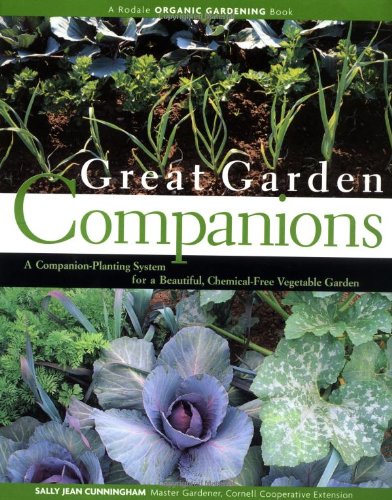
My Favorite Companion Planting Book


 I have used this book for years. It has provided inspiration on what to plant where and been just fun to read. There are lists of which plants discourage which pests, which plants attract which beneficial insects, and which plants help each other thrive. I love the garden design ideas, such as the wheel garden and the front yard salad garden. The information is organized in a user-friendly way so that it's easy to find what you want, and you will want to read more than what you came for. I highly recommend this to any gardener who wants to avoid chemicals.


Wednesday, April 13, 2016

Kale for Lunch

Kale  for Lunch
Kale Growing in Flower Bed, © B. Radisavljevic

Kale is Easy to Grow


Early in spring two years ago, I planted some organic kale seeds among my flowers in my front garden bed. A plant sprouted and just lurked behind all the blooming plants as it grew during the spring and summer. One day I noticed it had grown up and was ready to harvest. I decided if I didn't get my kale, the snails and other critters would. So I picked the more mature leaves, leaving only what you see in the photo here.

Since then I've grown much more kale. Some has even reseeded, landed across the yard, and spouted into new plants where I least expected to find them. See more photos in The Garden is Full of Surprises.  This one shows you the kale that planted itself at the edge of my gazania patch by the driveway. Kale is so easy to grow it will plant itself.

Kale  for Lunch
Kale Self-Sown in Flower Bed Beside Gazanias, © B. Radisavljevic

Kale is Nutritious


Kale is packed with nutrients . It's a good source of Vitamins A, C, B6, and K. One cup of cooked, chopped kale in its naked state, before you add salt or other seasonings or oil to cook it in, contains three grams of dietary fiber and two grams of protein, but only two grams of sugars and only 36 calories. It also contains important minerals, such as calcium and potassium. It is low in both sodium and saturated fat. It's an ideal food for people trying to lose weight by eating nutrient-rich low-calorie foods.

Most people know that kale is a healthy food to include in one's diet. For many people, though, the question is how to eat it so that it tastes good. I also wanted to know. As I searched the internet for recipes I thought might work for me, I finally found one to modify for my needs.

Kale Stir Fry

I started with ten large leaves I had harvested and their stalks. I thoroughly rinsed and inspected each leaf to make sure it was clean and critter-free. Good thing I did, too, because there were a couple of very tiny little snails, smaller than a peppercorn, on my kale. I made a mental note to reapply my iron-based snail bait again before watering that night. It's safe to use around vegetables and pets.

Kale  for Lunch
Tiny Snails on Kale , © B. Radisavljevic


After the kale was clean, I dried it. I cut the leaves into small enough pieces to fit in my salad spinner and spun them dry. I had removed the halves that were mostly stalk and dried them on a towel. Then I laid both stalks and leaves lengthwise on my cutting boards and cut across them in one-inch intervals. The pieces were long from leafy side-to-leafy side, and short on the stem length when I finished. They go down to bite size when you cook them.

I then chopped two onions because we like onions and they add flavor. I also chopped three cloves of garlic. I laid out some wine vinegar and soy sauce. You can use any kind of vinegar you choose. The wine vinegar was all I had. The recipe I was adapting called for chopped walnuts, but I didn't have enough to spare a cup, so I used some slivered toasted almonds I had instead, and laid those out. I also combined some dried basil and oregano, crushed to make about a tablespoon, and set it aside near the stove.

Then I had to find a pan large enough to hold all the raw kale. It's quite bulky with all that fiber. I settled on a 4 ½ quart stainless steel saucepan with a copper bottom. This  Cuisinart 733-30H Chef's Classic Stainless 5-1/2-Quart Saute Pan with Helper Handle and Cover would have been much better, since it can hold even more and can even be used in the oven. If you click  through, be sure to watch the video presentation on the left side of the page.

Next I poured in about three tablespoons of olive oil and let it heat until I knew it was hot. I then sautéd the onions and garlic until the onions were translucent. I was using an electric stove and started my oil heating on 6. I kept it there until the onions were finished and then turned the heat down to 5.

I  began to add the kale a handful at a time as I stirred with a wooden spoon. As each handful began to wilt, I sprinkled a bit of vinegar and soy sauce on it and then added another handful, continually stirring until all was wilted.

I turned the heat down to 3. At this point I mixed in the crushed herbs I had set aside, and the almonds, and continued to stir until all was thoroughly mixed. I took a quick taste to see if more vinegar or soy sauce was called for and added a bit more of each.

By this time the heat level had gone down, and I covered the pan and let it cook on low, stirring every minute or so to make sure it didn't burn. Depending on your stove, you may want the heat lower. You want it hot enough to keep cooking a bit, but not not enough to make the food stick. It takes about five minutes. Then I turned the heat off, gave it a final stir and set it aside, knowing it might be a while before my husband got home.

It sat there in a warm state for a few minutes before I ate a bowl. It was quite tasty. This is what was left after about two cups had been removed and eaten.

Kale  for Lunch
 Kale  for Lunch , © B. Radisavljevic


Using Raw Kale in Salads

Since that day I have learned I can also eat and enjoy raw kale as part of a salad. I wash and spin it in a salad spinner to dry it. Then I tear it into bite-sized pieces. After that I massage it in a bowl to make it more palatable. (See the video in Hollyhocks are Edible if you want to see how the massaging is done, since I also use this method on hollyhock leaves and chard.)

Once it is massaged, I put it aside and prepare the other greens I'm using, if any, and add some edible flowers like borage flowers and calendula petals for color. Since I have this for lunch, I also add some protein like broiled chicken chunks, a hard-boiled egg, or some tuna. I usually also add some sweet red pepper chunks, cucumber chunks, and / or cooked broccoli in bite size pieces -- whatever I have on hand.  I top it with Italian dressing and it's quite filling. It even tastes good and Hubby ate it with me without complaining.

Try Kale

If you once decided you didn't like kale because you've only tried it boiled with vinegar, don't give up on this power-packed superfood. If my recipes didn't tempt you, get one of these books of kale recipes for additional ideas. Your body will thank you for having kale for lunch -- or dinner. 

If you enjoyed this post, please share it. The sharing buttons are just above the comment box at the end of this post. The photo below is especially designed for pinning. 

Kale  for Lunch

This is my eleventh post for the 2016 AtoZchallenge, a Blogging Challenge for the month of April, 2016. My theme is plants, since this is a gardening blog. Here are links to the other posts if you missed them.

A is for Apple Blossoms
B is for Bottlebrush
C is for Carnations
D is for Daisy

E is for Elderberry
F is for Flowers
G is for Gazania
Hollyhocks are Edible
Irises Are Garden Survivors

Friday, April 08, 2016

G is For Gazania

Gazanias are simple but lovely flowers. Because they are so common here in California, it's easy to not notice the flowers much during the seasons when taller and more spectacular flowers are in bloom. In winter, though, they shine, and bring bright color to gloomy landscapes. That's why I've chosen it over other flowers to represent the letter "G" in this AtoZchallenge

As you see in the photo above, the bright color of the gazania attracts spiders and insects. In the photo below you see a visiting butterfly. 


There are two types of gazanias -- clumping and trailing. They will both cover the ground and they are about the same height. They both spread, but the trailing spread more quickly with their long running stems. Here's a photo where you can see some of my clumping gazanias growing under a goldenrain tree in my side yard. They are gradually spreading, but still have some space to fill. I'm hoping to get the weeds out and plant some root divisions soon. It's April, and the weeds have sprung up with the recent rains. 


Gazanias are used most often as groundcover and border plants. They are also used as fillers around new perennial shrubs until the shrubs grow enough to be attractions on their own. In the photo below, the gazanias are acting as groundcover in the space beside my driveway up to the boundary of my neighbor's yard. The kale you see on the edge spouted on its own, probably planted by the wind from the mother plant last year. 


In the photo above, you will notice that the flowers are not open. That's because today is cloudy. Gazanias only open in the sun. They close at night and when it is overcast. 

Below you see gazanias filling the space between the edge of the flower bed, surrounding the carnations, and extending almost to the rosemary in the center back. Without the gazanias, which I do need to divide now,  their space would be taken by the weeds like the ones now surrounding the irises. I hope I have time to get at those weeds soon. 


Gazanias don't need much care. They thrive in full sun and can tolerate poor soil. They don't need much water so we can consider them drought-resistant plants. What they can't handle is hard frost. One year almost all my gazanias died when we had an abnormally cold winter and the temperature got down to 12 F. This next photo shows what happened that year. The tops may die back, but most roots survive and revive the plants in warmer weather. 


If it doesn't get that cold in winter, the gazanias just bring a bit of sunshine to mostly dormant flower beds. 


Most of my gazanias have the  coloring of the ones below. Gazanias are available in many colors. I like the sunny ones. 


Sometimes gazanias spread in ways only nature understands. I have told my gardener to just mow around this one.  I just may take out the lawn and replace it with gazanias that don't need mowing or much water. I don't water the lawn anymore anyway now that brown lawns are fashionable during the drought. I will replace it with drought-resistant plants and bark chips as soon as I have the time and money. 


Are you growing gazanias yet? If not, why not pick up some seeds and get them in the ground so they can brighten your garden? Here are some of the available colors. 


If you enjoyed this post, please share it. The sharing buttons are just above the comment box at the end of this post. The photo below is especially designed for pinning. 


This is my seventh post for the 2016 AtoZchallenge, a Blogging Challenge for the month of April, 2016. My theme is plants, since this is a gardening blog.  Here are links to the other posts if you missed them.

A is for Apple Blossoms
B is for Bottlebrush
C is for Carnations
D is for Daisy

E is for Elderberry
F is for Flowers

Saturday, November 08, 2014

After the Rains Come the Snails

Snails on the Kale


We had our first rain of the season to break our long drought last week. This made all the inhabitants of the California Central Coast very happy. It also reactivated the snails.

Unfortunately, I had not thought to reapply my favorite snail bait before the rain. I don't use poisons, since I'm an organic gardener, but the bait I use contains iron phosphate which kills the snails without affecting people or pets. 


When I went out to pick my kale to cook for dinner, I saw baby snails on the underside of the most chewed up leaves. 


After the Rains Come the Snails
Snail on Kale, © B. Radisavljevic 

The Brown Bug


 I also saw this brown bug. I'm not sure what it is. I'm hoping it doesn't have too many friends in my yard. I'm hoping the bugs aren't as voracious as the snails. 


After the Rains Come the Snails
Brown Bug on Kale, © B. Radisavljevic 


I did spread what snail bait I had left, around my kale and chard plants to try to discourage any more baby snails, but I think I'll have to spend some time hand picking some off tomorrow. 


How I Cooked the Kale

After cleaning the kale and a couple of dandelion plants I also plucked from the garden, I chopped them up and stir fried them with chopped onions and garlic in the grease from two slices of bacon I had cooked and removed to let them drain. I added a bit of olive oil before adding the veggies. After stir frying the veggies until the greens were limp and the onions transparent, I added a bit of lemon juice, vinegar, and soy sauce before crumbling the two slices of cooked bacon and adding it back in. I turned it on low and covered it until everything was tender enough to eat. As far as I know, we did not have any escargot.


How do you cook your kale? If you still need ideas, try one of these recipe books and you'll turn into a kale chef.


Related Posts Plugin for WordPress, Blogger...