Showing posts with label gardening books. Show all posts

Wednesday, May 10, 2017

Irises Fading, Lamb's Ears Blooming, Chard and Kale Bolting

I Hate to Say Goodbye to My Irises

I have been enjoying irises in bloom since February, and I hate to see them go. Yet I can see more iris flowers dying each day. I'm glad there are still a few more buds that haven't bloomed yet. Below you can see what's left of a pale purple iris. The bending chard about to flower points to it. Above the chard a blooming Lamb's Ears plant reaches for the sky. 


Irises Fading, Lamb's Ears Blooming, Chard and Kale Bolting
Fading Iris, Bolting Chard, and Sages and Scabiosa in Background, © B. Radisavljevic

If you peak carefully behind that irsis, you can see the beginning of my tricolor sage starting to bloom. This is the first year it's bloomed for me. The large clary sage behind the iris shouldn't bloom until next month, but you never know. Learn more about clary sage and see it in bloom in my garden. Those blue flowers at the very back left are scabiosas, also known as pincushion flowers. I've often planted them in my gardens because they are perennial and seem to thrive.  

I took the photo below in a different flowerbed on the front corner of the lot. It shows the remaining light purple irises in all stages of development. You can also see the miniature roses that have started to bloom. They are later than my other roses. The yellow flowers are gazanias. They are closed today because it's overcast.

Irises Fading, Lamb's Ears Blooming, Chard and Kale Bolting
Irises Budding, Blooming, and Fading, Next to Miniature Roses, © B. Radisavljevic

Lamb's Ears in Bloom

I'd like to show you how fast Lamb's Ears grow. The shot below was taken at the end of February. Notice how short it is compared to the irises on the right, the lilies of the Nile in back, and the star jasmine in the background. The entire bed will change by May.

Irises Fading, Lamb's Ears Blooming, Chard and Kale Bolting
Lamb's Ears Next to Sidewalk, February, 2017. © B. Radisavljevic

In April I finally got around to thinning both the Lamb's Ears and the jasmine. They were smothering my Spanish sage and Sweet Williams. See Garden Tasks Finished before Storm.

Irises Fading, Lamb's Ears Blooming, Chard and Kale Bolting
Lamb's Ears Next to Sidewalk, April 6, 2017. © B. Radisavljevic


Now it's May 10, same year. Look at how the plants have grown. It amazes me how fast the Lamb's Ears shoot up and start blooming. It seems they grow half an inch a day in April. The star jasmine is also beginning to bloom. The yellow calendula to the right of the Lamb's Ears blooms all year. 

Irises Fading, Lamb's Ears Blooming, Chard and Kale Bolting
Lamb's Ears Next to Sidewalk, May 10, 2017. © B. Radisavljevic

I do love Lamb's Ears because it works well as a groundcover when I need it to smother weeds. It's also easy to pull when its fast growth becomes a problem. It looks like more will have to come out soon. All these Lamb's Ears plants have spread from other plants. I started with just one plant at this house. As it spread I planted a few of it's children in other beds. But many children also grow several feet from any I have planted. 

Lamb's Ears also have a certain graceful beauty. They lurk during the winter, but in spring they rise toward the sun and bloom. The bees use them for forage. Here's a close-up of the little flowers. Their gray leaves and fuzzy texture add contrast to the green of other plants to add interest to the garden all year round. 

Irises Fading, Lamb's Ears Blooming, Chard and Kale Bolting
Lamb's Ears in Bloom, May, 2017, © B. Radisavljevic


Books to Help You Grow Great Chard and Kale


The Chard and Kale are Bolting


The kale was just starting to flower a month ago on April 6. Now many of those flowers are seedpods. I will try to collect some, though there's probably no need. I never planted this kale. It sprouted from a seed from the mother plant across the yard. By collecting the seeds I'm more likely to get the seedlings where I want them.

Irises Fading, Lamb's Ears Blooming, Chard and Kale Bolting
Kale Flowers and Seedpods, May 10, 2017, © B. Radisavljevic


Here's a close-up of the flower. 

Irises Fading, Lamb's Ears Blooming, Chard and Kale Bolting
Kale Flowers, May 10, 2017, © B. Radisavljevic


One branch of this kale plant had started leaning over the sidewalk. Couldn't resist snapping this photo of it. 

Irises Fading, Lamb's Ears Blooming, Chard and Kale Bolting
Bolting Kale Branch Hanging Over Sidewalk, May 10, 2017, © B. Radisavljevic


Although the kale is already making seeds, the chard is just starting to flower. In the last couple of weeks the stalk has risen and you can see the flower buds on this chard plant forming. Just two months ago the main stalk and the leaves were red. (This is rhubarb chard.) As it begins to flower both have turned green, but you can still see a few traces of the red. 

Irises Fading, Lamb's Ears Blooming, Chard and Kale Bolting
Budding Chard, May 10, 2017, © B. Radisavljevic


When I went to the backyard on the same day to take a photo of the chard by the rose garden, I discovered my might I have two micro-climates on this same property. The the chard in the photo above grows in front and gets afternoon sun because it faces west. The chard plant beside the rose garden gets morning sun from the southeast. It also has the shelter of the fence and the roses from the north side. In any case, small flowers are already starting to bloom on the plant by the rose garden. 

Irises Fading, Lamb's Ears Blooming, Chard and Kale Bolting
Flowering Chard beside Roses, May 10, 2017, © B. Radisavljevic

It's the same small yard and same variety of chard, but one plant flowers slightly ahead of the other. 

I will leave you with one last photo from the front flowerbed of the chard and a blooming Lamb's Ears plant side by side. You can see how red the chard started out on the bottom part. You can also see how high the Lamb's Ears got in comparison. 


Related Posts


1st Iris This Year


Irises Are Garden Survivors

Wednesday, March 29, 2017

What's Happening in my Garden in Early Spring?

There Are Lots of Garden Tasks to Be Done

We've had a lot of rain in the past two months, and the garden reflects that. The weeds are trying to take over, but I've been too busy going to and recovering from dentist appointments to do much about them. The grassy weeds are the worst.  Fortunately, my lamb's ears, which grow as fast as weeds, are helping to keep some of them at bay. Meanwhile, the bees are really enjoying the flowers that are appearing everywhere and the kale is bolting.

What's Happening in my Garden in March
Grassy Weeds Trying to Take Over the Garden, Lamb's Ears Trying to Compete

Weeding and Thinning


In the photo above you can see some of the garden tasks I'm way behind on. Weeding is probably the most important. If I don't get the weeds out of the way, the reseeding plants may not get the light they need to sprout. Some of the lamb's ears, much as I love them, will also have to go. As you can see below, they are choking the emerging Sweet William seedlings from last year's seeds. I'll also have to cut back the star jasmine that surrounds and is starting to cover these plants. Looks like I will also have to reapply my non-toxic snail bait in this section. I usually use the cheapest brand, and it works.

What's Happening in my Garden in Early Spring?
Lamb's Ears Smothering Sweet William Seedling, while both Fight the Star Jasmine, © B. Radisavljevic 

With all this weeding to be done, it's time to check my gardening tools again. If you find yourself short, this Vremi 9-piece tool set has all one needs to tackle most weeding jobs.


Bees in the Holly
The holly is in bloom, and the bees love it. I took this photo a few days ago. I'm glad I did because the gardener trimmed some of the flowers off today. He said the bees were pretty angry with him as he worked and he had to be careful. I think there are still enough flowers to keep the bees busy. 

What's Happening in my Garden in Early Spring?
Bees Foraging in Holly Flowers in March, © B. Radisavljevic

The Bolting Kale

I currently have four kale plants growing in my flower beds. Three of them are volunteers that did not exactly grow where I would have placed them. All of them are bolting now. I will probably cut the flowering stems from the weakest plants, and let the others go to seed for next year's crop. I will also have to harvest and freeze a lot of the leaves that are left.

 My top photo showed my best kale plant. I understand now why it may not have had the aphid problems the other plants had. Its close neighbors are calendula and catmint, both of which help repel or trap these pests that bother my other plants. Also, that kale in my front flowerbed gets more regular water than the other plants, and better soil. It is the only kale plant with drip irrigation. 

The kale plant below gets less care than any of the others. It sprang up between my driveway and my neighbor's yard in the bed in the middle. There is a birch tree there and gazanias cover most of the ground. It is not irrigated unless I remember to pour some water on the kale plant. How it ever took root there I'll never know, but I have used many of its leaves. You can see from its flowers that it's bolting. So are the other plants, but the flowers are harder to see in their photos. 

What's Happening in my Garden in Early Spring?
Flowers of Bolting Kale, © B. Radisavljevic


This is actually a pair of kale plants below. I never thinned them. I sometimes use their leaves, but they are often plagued with aphids. They have poor soil and no companion plants but gazanias. They do not have regular irrigation. They grow in the corner of a bed of gazania and star jasmine beside the driveway. Like the plant above, they came from the mother plant you see at the top of this blog post. 

What's Happening in my Garden in Early Spring?
Twin Kale Plants by Driveway, © B. Radisavljevic

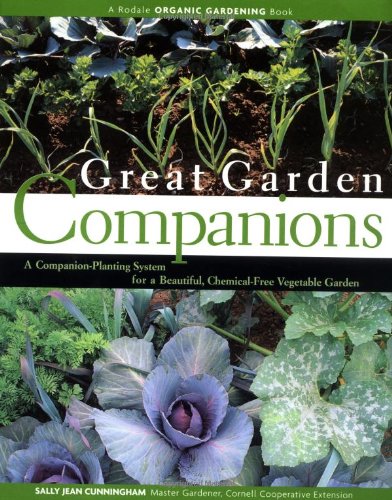
My Favorite Companion Planting Book


 I have used this book for years. It has provided inspiration on what to plant where and been just fun to read. There are lists of which plants discourage which pests, which plants attract which beneficial insects, and which plants help each other thrive. I love the garden design ideas, such as the wheel garden and the front yard salad garden. The information is organized in a user-friendly way so that it's easy to find what you want, and you will want to read more than what you came for. I highly recommend this to any gardener who wants to avoid chemicals.


Wednesday, April 06, 2016

Elderberry: A Useful California Native Tree

Elderberry is a California Native

Elderberry is often seen growing wherever it has found ideal conditions to sprout. That's how I got this tree. I didn't plant it. I just noticed it one day and decided to find out what it was.


E is for Elderberry
Elderberry and Milk Thistle, © B. Radisavljevic

Once it takes up residence on your property, it grows quickly. You could even use the old expression "grows like a weed" because it applies to the elderberry. It may also be growing right next to your other weeds, as the photo above shows.


Elderberry Grows all over San Luis Obispo County

E is for Elderberry
Elderberry in Bloom and Forming Fruit, © B. Radisavljevic


Many do consider it a weed. I never planted mine. I just allowed it to grow in peace. It would not surprise me to learn that birds plant most of our elderberry trees. They love elderberries, and I'll leave the rest to your imagination. Although the gardening books indicate the elderberry tree thrives in moist soil in full sun, mine has only the full sun. I have never watered it and we don't get much rain.

 My property came with a number of fruit trees already growing in a small home orchard. I think I had been there a few years when I was walking through the orchard and discovered a shrub I had never noticed before. It was covered with light yellow star-shaped flowers. By the time I had been able to identify it, it had turned into a tree. Once I knew what it was, I started noticing elderberry trees along the sides of roads, in vacant places, at Larry Moore Park, and even beside a parking structure in San Luis Obispo. (See photo below.) I was surprised to learn the elderberry is a relative of the honeysuckle.


E is for Elderberry
Elderberry Tree Beside Parking Structure in San Luis Obispo, © B. Radisavljevic

Blue Elderberries Are Edible and Are Sometimes Used Medicinally


Once I discovered I had elderberries, I remembered hearing on the Organic Gardening email list I once subscribed to that members had used used the berries to make elderberry wine and the flowers to make elderberry tea. I've seen recipes for elderberry pie, elderberry jam, and more. Members also shared their medicinal uses for elderberry. At that time, I still didn't know I had an elderberry tree. Once I  found out, I still decided to leave the berries for the birds unless the time came when I really needed to eat the berries, since most recipes use a lot of sugar to sweeten them and I'm supposed to refrain from sugar. Here is a closer look at the berries in various stages of ripeness.

E is for Elderberry
Elderberry Tree with Fruit in Various stages of Ripeness, © B. Radisavljevic

If you aren't growing any elderberries, but would like to use them for food, you can often find them in public places, ready to harvest. Just be sure you have properly identified them.  You can find help with this in my favorite go-to book for herbs and their uses, Rodale's Illustrated Encyclopedia of herbs. My 1997 edition devotes four pages of over 500 to just the identification, history, and uses of elderberry. It is equally useful in providing the information you might need on other herbs. No one who loves herbs should be without it.  it appears the book is out of print, but used copies are available at reasonable prices.

The two best books I own that include elderberry recipes are Edible and Useful Plants of California by Charlotte Clarke and Feasting Free on Wild Edibles by Bradford Angier. Unfortunately, neither has color illustrations like the books below do, but they do tell you what to do with your wild edible plants once you have identified and harvested them. Most books say you can get sick if you eat too many of them raw, so cook most of what you pick.There are some other wonderful books for foraging, identifying, and using California wild edible plants listed on Amazon that tempt me to buy more than I can afford. For elderberries, I'd probably start with the books below.


If you enjoyed the information in this post, please share it using the buttons just above the comment box. The photo below is just right for pinning.

E is for Elderberry


Related Posts Plugin for WordPress, Blogger...