Wednesday, April 06, 2016

Elderberry: A Useful California Native Tree

Elderberry is a California Native

Elderberry is often seen growing wherever it has found ideal conditions to sprout. That's how I got this tree. I didn't plant it. I just noticed it one day and decided to find out what it was.


E is for Elderberry
Elderberry and Milk Thistle, © B. Radisavljevic

Once it takes up residence on your property, it grows quickly. You could even use the old expression "grows like a weed" because it applies to the elderberry. It may also be growing right next to your other weeds, as the photo above shows.


Elderberry Grows all over San Luis Obispo County

E is for Elderberry
Elderberry in Bloom and Forming Fruit, © B. Radisavljevic


Many do consider it a weed. I never planted mine. I just allowed it to grow in peace. It would not surprise me to learn that birds plant most of our elderberry trees. They love elderberries, and I'll leave the rest to your imagination. Although the gardening books indicate the elderberry tree thrives in moist soil in full sun, mine has only the full sun. I have never watered it and we don't get much rain.

 My property came with a number of fruit trees already growing in a small home orchard. I think I had been there a few years when I was walking through the orchard and discovered a shrub I had never noticed before. It was covered with light yellow star-shaped flowers. By the time I had been able to identify it, it had turned into a tree. Once I knew what it was, I started noticing elderberry trees along the sides of roads, in vacant places, at Larry Moore Park, and even beside a parking structure in San Luis Obispo. (See photo below.) I was surprised to learn the elderberry is a relative of the honeysuckle.


E is for Elderberry
Elderberry Tree Beside Parking Structure in San Luis Obispo, © B. Radisavljevic

Blue Elderberries Are Edible and Are Sometimes Used Medicinally


Once I discovered I had elderberries, I remembered hearing on the Organic Gardening email list I once subscribed to that members had used used the berries to make elderberry wine and the flowers to make elderberry tea. I've seen recipes for elderberry pie, elderberry jam, and more. Members also shared their medicinal uses for elderberry. At that time, I still didn't know I had an elderberry tree. Once I  found out, I still decided to leave the berries for the birds unless the time came when I really needed to eat the berries, since most recipes use a lot of sugar to sweeten them and I'm supposed to refrain from sugar. Here is a closer look at the berries in various stages of ripeness.

E is for Elderberry
Elderberry Tree with Fruit in Various stages of Ripeness, © B. Radisavljevic

If you aren't growing any elderberries, but would like to use them for food, you can often find them in public places, ready to harvest. Just be sure you have properly identified them.  You can find help with this in my favorite go-to book for herbs and their uses, Rodale's Illustrated Encyclopedia of herbs. My 1997 edition devotes four pages of over 500 to just the identification, history, and uses of elderberry. It is equally useful in providing the information you might need on other herbs. No one who loves herbs should be without it.  it appears the book is out of print, but used copies are available at reasonable prices.

The two best books I own that include elderberry recipes are Edible and Useful Plants of California by Charlotte Clarke and Feasting Free on Wild Edibles by Bradford Angier. Unfortunately, neither has color illustrations like the books below do, but they do tell you what to do with your wild edible plants once you have identified and harvested them. Most books say you can get sick if you eat too many of them raw, so cook most of what you pick.There are some other wonderful books for foraging, identifying, and using California wild edible plants listed on Amazon that tempt me to buy more than I can afford. For elderberries, I'd probably start with the books below.


If you enjoyed the information in this post, please share it using the buttons just above the comment box. The photo below is just right for pinning.

E is for Elderberry


Tuesday, April 05, 2016

D is for Daisy


D is for DaisyDaisies infinite Uplift in praise their little growing hands, O'er every hill that under heaven expands.”By Ebenezer Elliott, English Poet

Daisy is simply a nickname for the Shasta daisy, a member of the diverse family of chrysanthemums. But why make it complicated? For my purposes in this AtoZchallenge, D is for daisy.  

I remember daisies growing in the garden of my childhood home. I used to add their petals to mudpies for a reason that now escapes my grown-up mind. The daisies in these photos grow next to the pumphouse on our Templeton property. I know I grew them from dividing a daisy somewhere else, so I must have brought the cutting from our previous home. Later, I divided an oregano plant and put it next to the Shasta daisy. The oregano is in bloom, but the daisy is just starting to bud. The photo was taken in July.


D is for Daisy
Daisy Buds in Midst of Blooming Oregano, © B. Radisavljevic, #AtoZchallenge


In the photo below, the daisy is just opening. This photo was also taken in early July, the day after the photo above.

D is for Daisy
Daisy Opening, © B. Radisavljevic, #AtoZchallenge


The next photo taken about ten days later shows the mature daisy, It has already attracted a visit from a crab spider who may take up residence there. 

D is for Daisy
Crab Spider on Shasta Daisy, © B. Radisavljevic, #AtoZchallenge

These daisies may not be prize specimens, but considering that they've had little care and have never been fed, they do pretty well. I had to laugh when I read that Shasta daisies thrive in fairly rich, moist, well-drained soil in a sunny spot. I guess mine aren't thriving, since the soil is far from rich. They do have a sunny spot and, although they may not be thriving, they are certainly surviving. 

Are you growing any daisies? If not, they are easy to grow. Try it. You can find many seed varieties at Amazon if you can't find what you want locally, or you can see if a friend growing daisies will share a root division.

Root divisions will be blooming before you know it if planted in spring. It's better, though, to plant them in fall so they can get established before it's time for the flowers to bloom.

Root divisions are easy to get. All you need to do is find a mature plant, get a shovel, dig deep under enough of the plant to get some roots, and pull out what's in your shovel. Keep the roots in water and the plant shaded until you get to where you will plant your root division. Do it before the day ends if you can. Have your planting place in full sun ready ahead of time.

It's best to plant at dusk or dawn rather than when the sun is bright and hot. Once planted, water well. Keep soil moist for a couple of weeks and then water as necessary. The gardening books on plant propagation will tell you to do a lot more than this, but this has worked for me. I've read the plant propagation books, and own many, but I don't always follow their expert advice to the letter. I've learned a lot just from other gardeners, and I also like to experiment to see what works for me. 

Do you love daisies but aren't  a gardener? There are some very realistic artificial daisies available now on Amazon with very reasonable prices. See some below. And if you would like daisies to light up your nights, check out the hand-sculpted daisy night light, complete with visiting ladybug, below.  I'm one of those people who needs a faint night light at night in my hallway and in my room. 

If you enjoyed this blog, why not leave a comment or pin the photo below to one of your Pinterest boards? Sharing buttons are above comment box below. 

D is for Daisy


Monday, April 04, 2016

C is for Carnations


C is for Carnations
Pink Carnation, © B. Radisavljevic
Carnations are among my favorite flowers. I love their scent, and Mom always had them in her garden, so I grew up with them. I have written plenty about calendula on other sites, and  I couldn't find my catmint photos until after I had already decided that for the purposes of this AtoZchallenge, C is for carnations. 

Mom loved carnations. So when I inherited her home in 2005, I wanted to plant some here. She had a lovely rose garden in the back yard, but had never planted any flowers in front for the neighbors to enjoy. I wanted to see some color there, so I started propagating new plants from my home herb garden and moving them in. Carnations add color to the flowerbed in winter and early spring before it gets hot.

C is for Carnations
Swallowtail Butterfly on Pink Carnations,  © B. Radisavljevic


Carnations are easy to propagate. I believe the light pink carnations in these photos are the progeny of a root division I originally got from Mom almost fifty years ago. If you pull a section of the plant off near the ground, remove the bottom leaves, plant it in good soil, and keep it watered until established, it will probably grow up to produce flowers. There are more complicated ways to do it, but I didn't find out about them until I had already been successfully propagating carnations from cuttings for several years. This swallowtail butterfly didn't care that I hadn't propagated my carnations by the book.

In 2013 I decided I wanted to grow a darker carnation, so I bought one from a local nursery. It's pretty crowded by other plants now, and I'm hoping I have time to remedy that soon, but I have gotten a few of the dark pink variegated carnation flowers from this plant.

C is for Carnations

As you  can see, the calendula seedling (left) that sprang up in front of the darker carnation almost looks like it's where the carnation came from. Instead it's helping  the carnation to hold up its head.

As you can see, I sometimes can't find time to  tend my garden as I wish I could, so it sometimes does as it pleases. When I compare it to the monotonous green shrubs that used to dominate this flowerbed, though, I'm happy that when nature takes its course I have the color I do now.

How does your garden grow? Are you growing any  carnations?

If you enjoyed this post about carnations, why not pin it to your Pinterest board?

C is for Carnations

Saturday, April 02, 2016

B is for Bottlebrush for #AtoZchallenge

B is for Bottlebrush
There are so many plants I could have chosen for this post that begin with "B." I considered borage, birch, butterfly bush and even bromeliads. But those are all plants I may wish to write more about than I have time for today. So for the purposes of the #AtoZchallenge I've decided "B" is for Bottlebrush. 

Bottlebrush (Callistemon) is a popular evergreen shrub in thirsty, drought-stricken California. It needs almost no water once established. I have two small bottlebrush trees in my immediate neighborhood. They can tolerate our alkaline soil. They should be planted in full sun.

B is for Bottlebrush
Bottlebrush in Bloom, © B. Radisavljevic


Although the bottlebrush flowers are a welcome touch of brightness to cheer the colder months when few other flowers are blooming, I would not advise planting them near a clothesline, if you still have one. I had a large bottlebrush bush about four feet from my clothesline in my first home, and on windy days those long red stamens would blow onto my clothes and stick to them.

I walk my neighborhood photographing plants all through the year, so I can record their stages of growth. The photo below shows a budding bottlebrush shrub (or is it a tree?) in the middle of December. The bottlebrush buds at this stage almost look like the buds of my apple or almond tree blossoms.

B is for Bottlebrush
Budding Bottlebrush, © B. Radisavljevic

On the same December day I photographed another part of the plant beginning to transform from flowers to seed capsules. Since I'm not sure which species this is, I don't know how long the seed capsules will stay on the plant. In some species they remain fastened to the stem until the tree dies or is burned. In others the seeds are released each year. I'll have to remember to check on these to see if any seed capsules have opened.

B is for Bottlebrush
 Bottlebrush Flowers Producing Seed Capsules, © B. Radisavljevic

I just learned you can make tea from some species. Green Deane, who writes "Eat the Weeds" wrote more about the bottlebrush here.  He includes information on making tea. When I saw the seed capsules of the plant, I was sure it must be related to the eucalyptus tree, another Australian native. I was right.

I captured the beauty of the bottlebrush plant against sky in the Zazzle print-on-demand products below. This is just a sample. The other bottlebrush products are here. If you want to grow your own bottlebrush bush or tree, Amazon carries many species of bottlebrush plants they can ship to you. 


Friday, April 01, 2016

Apple Blossom Time


I love Apple blossom time. It happens in May. 

These apple blossoms are in a very old tree on my Templeton property. I've been here for 23 years, and the tree was mature when I arrived. It's not a perfect tree. It has a couple of dead branches that need to come off. It is decorated year round with Spanish moss. But when it comes to bearing fruit, it's the most reliable fruit tree we have now.


Apple Blossom Time
Apple Blossoms on a Mature Tree, © B. Radisavljevic

I guess one doesn't have to be in perfect health to stay useful. One has to make the best use of what one has left, with God's help. That's what this tree did. See what happened with a couple of other damaged trees. 


Apple Blossom Time
Apples on Tree , © B. Radisavljevic

Whenever the apple trees bloom, this song comes to mind: "Apple Blossom Time"


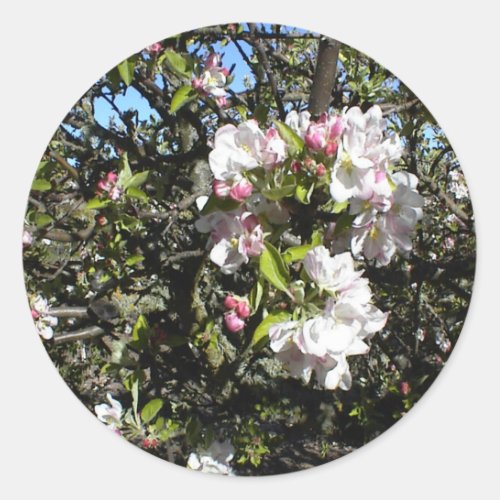
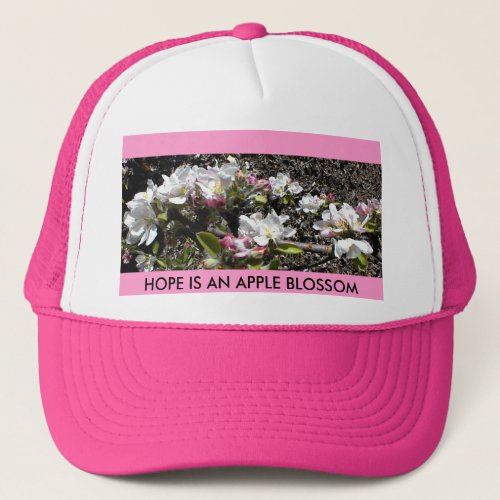
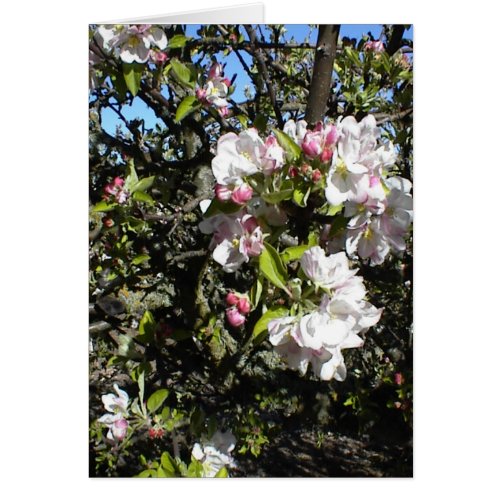
I love apple blossoms so much I made myself a hat  to remember my favorite apple tree. You can get one, too, or, if you prefer, a set of stickers or a greeting card to remember this lovely time of year.


Apple Blossoms, © B. Radisavljevic


I wrote this post to begin the 2016 A-Z Challenge  The requirement was to post at least one photo a day of subjects in alphabetical order with a few words to explain the photo.  My theme is, of course, plants and gardening.  

Saturday, February 06, 2016

Daffodils are Back in Bloom

Daffodils are Back in Bloom
Daffodil in Bloom with Budding Carnation,
 © B. Radisavljevic
Every year I look forward to the arrival of my daffodils. The first ones for this year began to bloom about two weeks ago. The minute I saw them blooming my heart warmed up. I took this photo on January 26. 


Daffodils are Back in Bloom
Daffodils in Bloom in Early February
 © B. Radisavljevic


The daffodil above emerged right in front of a carnation. If you click that photo to enlarge it you will see that the carnation is budding and will also be blooming soon. Both carnation and daffodil live in the front flower bed. As I was taking the pictures I see how many weeds are starting to creep in that someone needs to deal with, and suppose I am that someone.

The daffodils to the right live near the corner in the front part of the side bed. You can see an iris behind it near the sidewalk waiting for its turn to bloom in a couple of months. In the back  corner on the left side of the picture you see the dried flower remains of my French lavender which I need to  cut down before the new growth begins.


Daffodils are Back in Bloom
Daffodil and Hyssop in Bloom
 © B. Radisavljevic

Back in the front flower bed, I was surprised to see a bit of hyssop blooming next to this daffodil. Usually I don't see any of the purple hyssop flowers until June. You will probably have to click to enlarge the photo to see it, since the hyssop flowers are small. The daffodil sprang up between the extended hyssop branches. You can still see the dried flowers from last year forming a backdrop for its brilliant yellow.

One thing I love about daffodils is that they can push their way through almost anything. They are one flower I can plant that the gophers will leave alone. They brighten the world for a few weeks, and then they are gone and the tulips and irises take over. A few small tulips are beginning to push through the soil now, but they don't usually do very well here.

I think it's about time to feed these bulb plants some fish emulsion. I like to garden organically, and I use fish emulsion for many of my plants. I don't like to use chemical fertilizers. Since we can't depend on rain here in Paso Robles to water in granular fertilizers or powders, I like using the liquid fish emulsion because I can dilute it for application before applying it and it can go straight for the root zone. I have pretty well neglected these daffodils since I planted them in the fall of 2013, so maybe it's time to feed them. The ones pictured below in the front flower bed are in the poorest soil of all of them . You can see they are a bit shorter than the ones in the front flower bed.

Daffodils are Back in Bloom
Contrast between Budding and Blooming Daffodils , © B. Radisavljevic


I see it's also time to put out the organic snail bait. I have successfully used Sluggo and Garden Safe brands because they are made with iron phosphate. These baits won't hurts pets, wildlife or beneficial insects. I was sceptical at first as to  whether they would really kill snails, but I found out first hand that they do. You can even use this  around vegetables and herbs you plan to eat. The photo below will show you why I need to get the snail bait applied.

Daffodils are Back in Bloom
Snails Attacked Both Buds and Blooms of These Daffodils, © B. Radisavljevic

Notice that as the flowers were opening they began to be attacked. They live beside a jasmine vine and the snails hide out under it. Now that the rains have come, the snails are active again. You can still see the damage when the flowers were in full bloom, and in the bottom right photo you can see there's almost nothing left of them.

I have many more daffodil buds still to open, so I'm hoping these bright beauties will be around for a few more weeks. I always hate to see the last one die down.

Are you growing any daffodils this year?
Related Posts Plugin for WordPress, Blogger...