Showing posts with label flowers. Show all posts

Friday, December 18, 2020

Poinsettias Are Popular in December Flower Arrangements

Poinsettias Are Popular for Decorating Outside 

I remember when I was growing up, we had a poinsettia plant near our back door. For some reason, my mom didn't care for it. Maybe it was because of the sticky white sap that dripped when she cut the "flowers" off to bring them in for December flower arrangements. Some people believe the sap is poisonous, but at worst it can cause skin irritation. She used to tell me it was poisonous.

Here on the California Central Coast, we can put poinsettias and sunflowers together outside at the same time, as long as there is no frost. I shot this scene in December one year as I was walking my neighborhood.

Poinsettias Are Popular in December Flower Arrangements
Poinsettias on Bench in Neighbor's Garden in December, © B. Radisavljevic 

People in frost free zones can plant the poinsettia for winter color in their gardens, as well as holly and pyracantha, which have red berries at this time of year. My area in Paso Robles is not frost free. We do have some nights below freezing. 

Many Motels and Hotels Use Poinsettias for Decorating During the Holidays

We often used to visit family and friends in Southern California for Christmas Eve or Christmas Day. We usually stayed at a motel in either Thousand Oaks or Orange County, or both. We saw this poinsettia plant on a table in a public area at the Best Western Motel in Thousand Oaks. 

Poinsettias Are Popular in December Flower Arrangements
Poinsettias on Table at Best Western Motel in Thousand Oaks, CA,  © B. Radisavljevic 

This photo clearly shows the parts of the plant. It has evergreen leaves. Red bracts surround the small yellow true flowers. It appears most businesses don't want to mess with the sticky sap anymore than my mother did. They use potted plants to do their decorating. 

Many people give potted poinsettias as gifts. Whether you receive one or buy one to decorate, you may wonder how to care for it. Poinsettias like sunshine, so if they are indoors, make sure they sit by a sunny window. Try to keep the temperature in the room from fluctuating too much. Although  these plants like moist soil, don't let water accumulate in the bottom of the pot's saucer or the plants may get root rot. Your plants will appreciate it if you remove the decorative foil as soon as the holiday season has passed. 

After the red bracts and flowers begin to fall, it's time to prepare your plant for storage if you want to keep it. Prune stems back to two buds and decrease the amount of water you give the plant. It won't be as thirsty as it was.Give it just enough water to keep it from drying out.  Store it in a cool place until late spring when all danger of frost is past. 

When the weather is warm enough again in late spring, you can safely set the plants outside in the sun. You may want to let them adjust by only leaving them out for a few hours a day and gradually increasing the time until they have acclimated to their new setting. Those who live in frost free areas may be able to safely plant their poinsettias in the garden against a south wall to keep them warm and to protect them from strong winds. For more detailed information on keeping these plants alive after the holiday season,  please read How to Care for Poinsettias, published by Better Homes and Gardens.

San Luis Bay Inn In Avila Beach Decorates with Poinsettias 

I took these photos when we were visiting a friend who was vacationing at the San Luis Bay Inn one December. This arrangement was in the lobby. Do you notice the white poinsettias in this display? 

Poinsettias Are Popular in December Flower Arrangements
Poinsettias on Display at San Luis Bay Inn in Avila Beach, © B. Radisavljevic 


I thought this arrangement was particularly striking.

Poinsettias Are Popular in December Flower Arrangements
Poinsettia Decoration at San Luis Bay Inn in Avila Beach, © B. Radisavljevic 


The San Luis Bay Inn was lovely during the Christmas season. I can see why my friend chose to stay there. If you plan to be  in San Luis Obispo County for the holidays, you might want to consider spending your vacation at the San Luis Bay Inn Resort in Avila Beach, just a short walk from the beach. It has everything you could want: kitchenettes in the large suites, wireless internet, large public areas for relaxing, swimming pool, jacuzzi, exercise room, and more.  It's a resort in every sense of the word. You can book through the banner below. Rooms fill up fast, so it's wise to plan far ahead. 


***

Monday, January 15, 2018

First Daffodil Brightens my January Garden

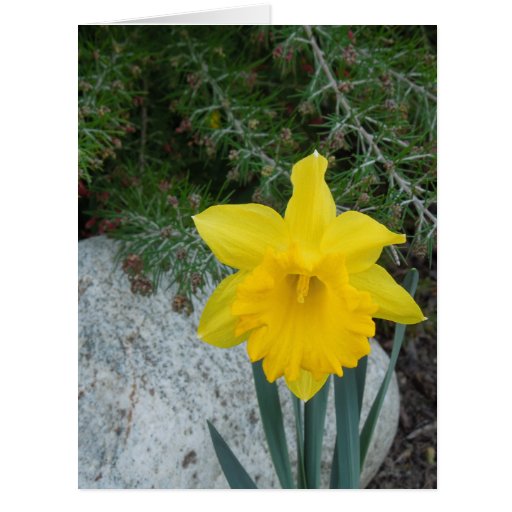
My First Daffodil of 2018


Normally my bright January colors in the garden come from calendula, but this year frost killed them all. That's why I'm so glad this daffodil decided to show up and brighten my garden a bit.

First Daffodil Brightens my January Garden

As you can see, the recent rain brought the snails out, and they've got a head start on me. I was slow getting the bait out for them because I'm only now almost over the flu that had me down since mid-December. I need to get that snail bait out before they eat everything I've got.  This is what I normally use and it works well for me  when I spread it in my flowers when the ground is wet. If I'd done it right after the rain, those holes wouldn't be in my leaves now.


My Garden Is Mostly Green and Light Purple Now


The light purple flowers in bloom are rosemary, scabiosa (Pincushion Flower), and borage. Of course, two of those are herbs.

First Daffodil Brightens my January Garden
Rosemary in January

First Daffodil Brightens my January Garden
Scabiosa in January with Gazania Leaves in Background


First Daffodil Brightens my January Garden
Borage Flowers in January

I don't usually see borage in bloom this early, but it reseeded last year. I'm afraid my plants have been fending for themselves since last year because I haven't had time or strength to do much for them. They have helped immensely by their reseeding. I'm hoping I'll be seeing new kale and chard plants soon. Meanwhile, I'm seeing lots of new clary sage and mullein plants. That's a reseeded mullein, one of many, in that pot above the borage in the photo above. It will be months before it blooms.

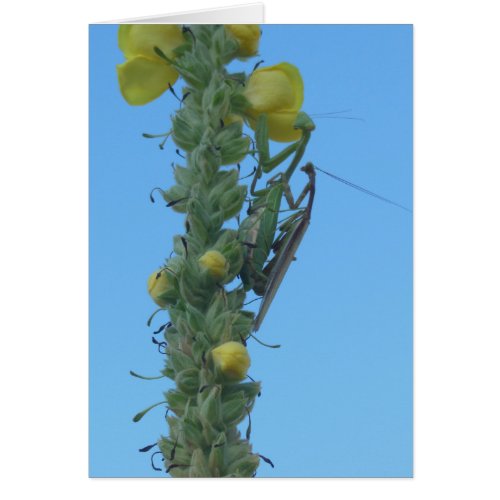
You can see below left how the mullein plant will look when it does bloom. This plant grew about six feet tall and this praying mantis pair found a home on it.


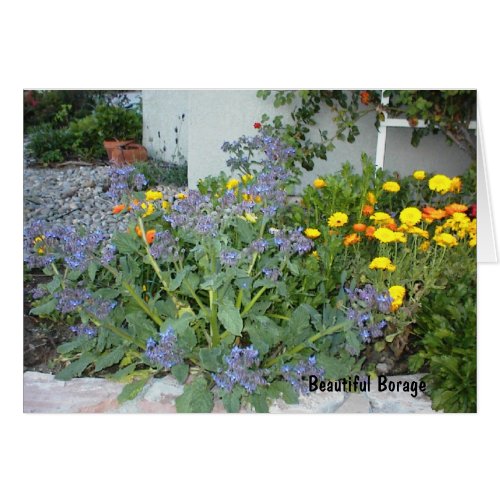
The card on the above right shows how beautiful the borage can be when it keeps its head up and is next to an orange or yellow plant like the calendula in the photo.

The image on the card below comes from my Templeton garden that has no snails because it rarely gets irrigation.


What I'm wondering now is where all those other daffodils I planted along with this the one now blooming are. This afternoon I cleared away some of the Lamb's Ears that might be obstructing them so the light can get to them, but maybe they are just taking more time than this one. I do hope more will come up and bloom by February. That's when I usually see them.

Are you growing daffodils this year? Are any of your normal January or February plants blooming earlier or later than usual this year?

**

Monday, April 10, 2017

Garden Tasks Finished before Storm

Cutting Back the Lamb's Ears and Jasmine in the Bed by the Garage

Every day this spring I've walked by this poor Spanish Sage plant I could barely see because it was being covered by jasmine from above. That blocked its light. On April 5 I finally made some time to cut the jasmine back and expose the sage to the light again. 

Garden Tasks Finished before Storm
Jasmine Blocking the Light the Spanish Sage Needs

Here is the same plant when I finished pruning back the jasmine. I also cut back some of the sage. Because it's been straining to get the sun, it got very leggy, and you can see its bare branches that were hidden by the jasmine. You can also see the tiny leaves on those stems. I hope they will now grow up instead of continuing towards the sidewalk. 

Next winter I will have to do this job sooner and cut the sage way back, but this winter I had the flu all during January and then had steady dentist appointments during February and most of March. After getting my root canals done I didn't feel like working in the garden or anywhere else, and I was always playing catch-up on other work. In addition to that, it rained a lot and the ground was wet. 

Garden Tasks Finished before Storm
I pruned the jasmine that was covering the Spanish Sage and also thinned the Lamb's Ears that were trying to smother it.


Not far from the Spanish Sage was a Sweet William struggling to survive -- maybe more than one. It's hard to tell in the midst of all the jasmine and Lamb's Ears plants.  Normally the Sweet William plants that reseed return at this time of year, but this year the Lamb's Ears spread so much that they completely covered any of the seedlings trying to emerge. Although I do love Lamb's Ears, enough is enough. I will probably still have to trim more of it back. I took the photo below on March 28. I knew I had to uncover any plants under that Lamb's Ears patch, and I had to just keep pulling and pruning until I found this plant. I was hoping there would be more. Maybe there still will be.

Garden Tasks Finished before Storm


Below is a close-up of the struggling Sweet William after I pulled a lot of the Lamb's Ears away from it. I had not realized the Lamb's Ears were propping it up. It was also very leggy and fell flat. I may have to prop it up with a small stake to keep it upright. I'm hoping it will spread as time goes on. Plants have an amazing ability to recover, just as my butterfly bush did after a storm knocked it down. 

Garden Tasks Finished before Storm
Struggling Sweet William after I Thinned Lamb's Ears Around It.
 
The photo below puts my afternoon's work into context. The star jasmine is in the background against the wall. Left to right: jasmine, struggling sage, Lillies of the Nile between jasmine and Lamb's Ears in middle, the space where the Sweet William tries to gain ground, more Lamb's Ears, blooming calendulas with budding irises behind them. Between the calendula and the car, you see the low green of the gazanias with a tall flowering kale behind it next to the brick trim. 

Garden Tasks Finished before Storm


What I Accomplished in the Front Flowerbed 

If you read my last post, you saw the state of the front flowerbed before I started weeding and thinning and pruning on April 6. The Lamb's Ears were out of control, the hyssop that hadn't been pruned was brown and ugly and taking over, the oregano in the pot needed pruning, and grassy weeds were trying to overwhelm anything the other plants were leaving alone. 

The two photos below were taken on February 13. We had had so much rain that weeding was almost impossible. I was also weakened by all the dental work I was having done. After even more rain in March, by the day I started the work the state of this flowerbed was even worse. 

Garden Tasks Finished before Storm

Since it was February, the daffodils were budding. My chard on the right bottom had turned red. You can see the dead growth on the oregano in the terracotta pot. That brown clump to the left of it is the hyssop. It looked even browner when I started cutting it way back on April 6. Pruning the oregano was much easier. 

The worst job, though, was getting the grassy weeds that were taking over any bare ground they could find. Their roots are very hard to get out. They also entangle the roots of the plants I want to keep. Here they are surrounding my catmint. The catmint itself has escaped from its pot and is now also running amuck, but at least I can make tea out of that.  

Garden Tasks Finished before Storm
Catmint in and out of Pot Surrounded by Grassy Weeds

The photos show only a portion of the work that needed to be done. I was trying to finish the most urgent tasks before the storm that was supposed to hit later at night started. Here is how the area around the catmint pot looked by the time I was through. Not perfect, but good enough to scatter some old seeds around before the storm brought rain to water them. They were very old seeds, but I thought I'd see what happened. Mother Nature often surprises me. 

Garden Tasks Finished before Storm
Catmint Pot After Weeding

Below you see what the hyssop plant looked like when I finished with it. Better late than never. It will grow out again before it's time for it to bloom in June. A few green shoots are already peaking out. I did miss a couple of branches, but I'll get them after I finish the taxes. After the rain, the catmint in the pot perked up again. 

Garden Tasks Finished before Storm
Hyssop after Haircut

Here's how the front flowerbed looked after I finished working and had scattered my seeds. The rain came as promised later and all the next day, so I'm hoping maybe at least a couple of seeds will sprout. On the lower right, in front of the irises, you see a green carnation plant with the leaves of an old daffodil plant in front of it. You could not see that carnation before I cut back the hyssop which was covering it.  I had forgotten the carnation was there. I fed it. 

Garden Tasks Finished before Storm
A Good's Afternoon's Work in the Flowerbed


When I finished for the day, I took the pictures of the flower beds and then turned to get the sky toward the west. The sunset promised rain. And it came. I'm glad I pushed myself to get some of the preliminary work done before it started coming down. 

Garden Tasks Finished before Storm


***

Friday, February 03, 2017

My First Iris this Year

Today I Welcomed My First Iris of the Season

I think it liked the rain. I don't normally see this iris until April, so it's quite early this year. I fed all the bulbs last night because more daffodils are blooming every day and many of the irises which haven't bloomed look smaller than they should be. The drought might be partly responsible, but they have lots of water now. 

My First Iris this Year


Only two days ago, I saw the buds looking as though they might be getting ready to bloom. Still, though, I was caught off guard when one actually did bloom today. It should soon be joined by other buds blooming. The plant in the pot behind the budding iris is a clary sage. 

My First Iris this Year
Budding Iris 1-1-2017


Iris Cards and a Baby Suit from Zazzle

All the photos of on these products were taken in my garden. The light purple iris is available on shirts for all ages, hats, and aprons, as well as on the baby bodysuit. Please click the suit to see what else is available.


Sunday, May 08, 2016

Nigella - A Wonderful Garden Surprise


Nature's Little Garden Surprises

Sometimes exploring my garden with a camera in my hand helps me see things I might not take note of otherwise. This morning when I was out spider and ladybug hunting, I saw a strange flower next to my mums and hyssop. It was unique. After half an hour of research, I identified it as nigella (Love in a Mist.) 


Nigella - A Wonderful Garden Surprise
Rose Color Nigella Flower, © B. Radisavljevic


Although finding this nigella was a surprise, it is not an accident. I first saw nigella at Fat Cat Farm in May, 2013. It looked like this.

Nigella - A Wonderful Garden Surprise
Blue Nigella Flowers, © B. Radisavljevic


I came back about a month later for my final purchase before Fat Cat Farm closed its doors. By June the seed pods on top were beginning to mature. I liked the unique form of this flower and wanted some, but Rhoda said it doesn't transfer well and was about to die back anyway. I seem to remember her digging one up for me anyway and potting it without charging me.  I seem to remember planting it, with hopes it would reseed, since Rhoda had said it reseeds freely.  I don't see evidence in my photo  record of that  year that I did plant it, but I know if I did, it did not survive or reseed.

The nigella plants look just right in a rock garden. Some of them were in a rock garden at Fat Cat Farm. I snapped this shot on my last visit that June. You can see how the seed capsules have grown. Nigella does need  to be watered while it's growing and blooming. 

Nigella - A Wonderful Garden Surprise
Blue Nigella Flowers in Rock Garden, © B. Radisavljevic


Later that year I bought some nigella seeds and planted some the next spring, but I forgot about it -- until today, when I started wondering what those strange-looking pink  flowers were. I found an old flower book I had  around the house and started looking at all the pink flower photos. Bingo! When I saw the name nigella, it clicked. I had been thinking of them as blue, like the ones I'd seen at Fat Cat Farm. I've since learned they also come in white and rose. I must have planted rose. Amazon has a varied selection of nigella seeds if you can't find them locally.

Nigella flowers are attractive in bouquets, dried, or in the garden. It's best to plant them from seed on open ground in early spring. You may think they are weeds when they first come up. I admit, I almost pulled them, but I've learned by now to recognize certain leaf patterns as more likely to be flowers. I thought it only fair to let these plants show me what they were before I took drastic measures. I'm glad I waited. "Love in a Mist" has rewarded me for my patience. Tomorrow I'll take another look around to see if there are anymore I haven't discovered yet.

Meanwhile, I remember Fat Cat Farm fondly, and I do miss it. This photo taken in their herb garden is an appropriate tribute.  It is also the right size for Pinterest if you'd like to share it there, as is the photo after it. The sculpture is made of recycled materials. I did not see the name of the creator.

Other share buttons are just above the comment box below.

Have you ever had Nigella in your garden or seen it growing?


Nigella - A Wonderful Garden Surprise


Saturday, April 16, 2016

"Naked Ladies" Bloom in August

"Naked Ladies" Bloom in August
 "Naked lady" leaves are lying dormant and brown near my pump house wall and along the edges of the mobile home we rent out. In August, though, they will reemerge and shoot up for all to see.  After a period in summer where they look almost dead, the "naked ladies" bloom  in August  on the Central Coast of California. 

They are a tradition for me. I was introduced to them when I was but a toddler, since they grew in the yard of the first home I remember. That was my childhood home in Bellflower, California, where my dad had a large vegetable garden, fruit trees that spoiled me forever after by letting me taste peaches, plums, and apricots fresh off the tree, and a fence that acted as a trellis for climbing berries. It was also the house where my dad raised chickens when I was little.

The naked lady flower’s scientific name is Brunsvigia rosea. It is better known as the Amaryllis belladonna.  It likes a warm, dry summer, such as those we have in southern and central California, though it’s native to South Africa.  In fall and winter it produces a clump of green, wide, ribbon-like leaves that are rather floppy.  It resembles a green fountain.  In this photo taken in mid-April, the leaves are still green, but the plants have had no care this year and were overgrown with weeds.

"Naked Ladies" Bloom in August
Amaryllis Leaves in April, © B. Radisavljevic


When the weather gets dry, the leaves die. Just about the time you think the plant is dead, about August here, up pop bare stems that have clusters of fragrant pink trumpet-shaped flowers at the top.  The photo at the top focuses on just the flower.  The photo below shows the naked stems, as well. The top flowers have already faded and are trying to form seeds. I had to cut them to prevent that after all flowers had bloomed.

"Naked Ladies" Bloom in August
Amaryllis Flowers in Bloom, © B. Radisavljevic


Amaryllis flowers are great for drought resistant gardens. I had planned to divide these and dig out some bulbs when they finished blooming and plant them in my Paso Robles garden for added color, but I didn't get around to it.

Amaryllis plants prefer to grow in well-drained soil and all their water needs are met by the winter rains. That fits the description of my side yard pretty well. Maybe next year I'll get them planted.

If you enjoyed this post, please share it. The sharing buttons are just above the comment box at the end of the post. The photo below is especially designed for pinning.

"Naked Ladies" Bloom in August

Thursday, April 07, 2016

F is for Flowers

F is for Flowers
Borage , catmint, calendula, and
 chocolate cosmos in bloom, © B. Radisavljevic
As I pondered what kind of flower or other plant started with the letter "F" for the AtoZchallenge, I couldn't think one. I could not find any plants that started with "f" for which I had photos. It suddenly dawned on me that "flowers" itself would work. I have hundreds of flower photos to choose from, so F is for Flowers. 

I'll start in my own garden. The photo above was taken in my front flowerbed. The small purple flowers at the top left are borage flowers from a plant that reseeded. The smaller white flower spikes are from a catmint plant which was overshadowed by the borage. I love to throw the borage flowers and the petals of the calendula flower (left, yellow) into my salads to add color. I can make tea with catmint, and the neighbor's cat sometimes comes over to steal a bit. You can barely see the chocolate cosmos, above the calendula next to a borage leaf. For some reason, the chocolate cosmos did not last past its first year. Maybe I only thought it was perennial.

F is for Flowers
Logan looking at hornworm on borage plant in front of catmint, borage flowers, catmint,
 calendula, and chocolate cosmos in bloom, © B. Radisavljevic


Above you see Logan watching a hornworm on the borage behind the catmint. Later I gave him a leaf, and he became quite intoxicated. You can see the photos of that in a related link at the end of the post. The yellow flowers that look like buttons are santolina. I planted that in a pot from a root division from a mother plant in Templeton. It did really well in this pot until it somehow got too much water. That killed it. The mother santolina plant gets almost no water and lives on. 

By now you have figured out I use a lot of herbs in my flowerbeds. I love them. I got most of my herbs from the now out-of-business Fat Cat Farm and the Sycamore Herb Farm which preceded it. I really miss having them right down the street. I then propagated those perennial herbs with cuttings or root divisions, and some just reseeded year after year. The flowers add color in their season and provide forage for the bees I like to befriend. They love my rosemary and black sage. So do the butterflies.

F is for Flowers
Bee Foraging on Rosemary, © B. Radisavljevic


F is for Flowers
Bee Foraging on Black Sage, © B. Radisavljevic


F is for Flowers
Butterfly on Black Sage, © B. Radisavljevic


Two other flowers that butterflies like are scabiosa (pincushion flower) and gazanias.

F is for Flowers
Butterfly on Gazanias,  © B. Radisavljevic


F is for Flowers
Swallowtail Butterfly on Scabiosa,  © B. Radisavljevic


One of my favorite flowers is this yellow rose. My mom used to live in this house, and she had a landscaper plant the rose garden in the back yard. I enjoy the roses, and although they are beautiful, I get more satisfaction from flowers I plant myself and watch grow.

F is for Flowers
Yellow Rose from my Garden,  © B. Radisavljevic


Below are two plants I've come to love -- Lamb's Ears and Sweet William. I have no idea how the Sweet William got here. One day I discovered it in my flower bed by the garage and I liked it. It took quite a while for me to identify it. It dies down every year in winter and pops up again in spring. It's trying to grow through the spreading Lamb's Ears, which I'm in the process of thinning. The Lamb's Ears have a tendency to spread. It all came from one root division from a plant in Templeton and it is now trying to take over every flower bed I have. I love it, but it needs boundaries. As you can see, it's just starting to bloom this year. 


F is for Flowers
Lamb's Ears and Sweet Williams Growing Together,  © B. Radisavljevic


In 2013 I planted a lot of daffodil bulbs. Some were very close to the black sage which is now trying to make a canopy over them. Black sage really needs to be pruned every year if you don't want it to grow to six feet wide. I will probably have to move any of the daffodils near it before next season. This daffodil is peeking out from the black sage. 


F is for Flowers
Daffodil Emerging from under Black Sage,  © B. Radisavljevic

The rest of the flowers are from my neighborhood or in public places. Just below is lantana that was growing in a planter in front of the Park Cinemas in downtown Paso Robles. I love lantana, but haven't had good luck growing it. I'd never seen its berries before. Birds eat lantana berries, but they can be toxic to people and pets.


F is for Flowers
Lantana Flowers and Berries,  © B. Radisavljevic

I love my neighbor's garden. She grows many plants I love. She and I both like to mix them up. Here she has irises, roses, Jupiter's beard, California poppies, and a red sage. I featured much more of her garden in "Earth Laughs In Flowers." 


F is for Flowers
My Neighbor's Garden,  © B. Radisavljevic


This is my sixth post for the 2016 AtoZchallenge, a Blogging Challenge for the month of April, 2016. My theme is plants, since this is a gardening blog.  Here are links to the other posts if you missed them.

A is for Apple Blossoms
B is for Bottlebrush
C is for Carnations
D is for Daisy
E is for Elderberry

You can buy these greeting cards made from photos of the flowers in my garden by clicking the images below. You can see my blank floral card collection here. 


& 


If you enjoyed this post, please share it. The sharing buttons are just above the comment box at the end of this post. The photo below is especially designed for pinning. 


F is for Flowers


Related Posts Plugin for WordPress, Blogger...