Friday, March 13, 2015

Daffodils Fading, Irises Starting to Bloom


Emerging from Winter

Daffodil and Black Sage in mid-February, © B. Radisavljevic
It seems February went by in the garden so fast I didn't get around to posting about it. But most of what was blooming in February is still blooming in March. Since my two garden properties have limited space and I have limited time, when reporting on blooming, I will also report on what I see while out walking. Everything you see here was blooming during some part of February and /or  the first two weeks of March in either Paso Robles or Templeton, California.

Blooming Trees

Almond Blossoms, © B. Radisavljevic
In February, I always start looking for blooming almond trees. This blossom is on my own tree. It doesn't give me any almonds because it's old and we haven't known how to care for it properly. In the twenty years since we bought the property, it's never borne enough almonds to feed any but the squirrels. We inherited the orchard from the previous owner, but he did not care for the trees that were on the property when we bought it. 

Apricot Blossoms in March, © B. Radisavljevic
I was surprised and delighted to see today that my apricot tree was blooming in Templeton. It did not bloom last year. Must have been the rain. Three of our newer peach and nectarine trees are also in bloom, but I don't have room to picture all of them, and they are very small. 

Ornamental flowering trees can be seen all over town. The pink ones seem destined to produce small
Flowering Trees and Horses, © B. Radisavljevic

cherry-like plums, and the white ones are usually Bradford ornamental pears. You will see them all in a wall of blossoms at Barney Schwartz Park in Paso Robles. They are on the streets and in the parking lots. It seems all of Paso Robles is blooming. But the photo I want to show you of the blooming trees is this one I took on Union Road yesterday. I think they look good with horses under them. 


Flowers in Bloom

Many of my own flowers are in bloom, or have been at this time of year in past years. I will show them to you below. 

 © B. Radisavljevic
Daffodils with Black Sage in February, 2015


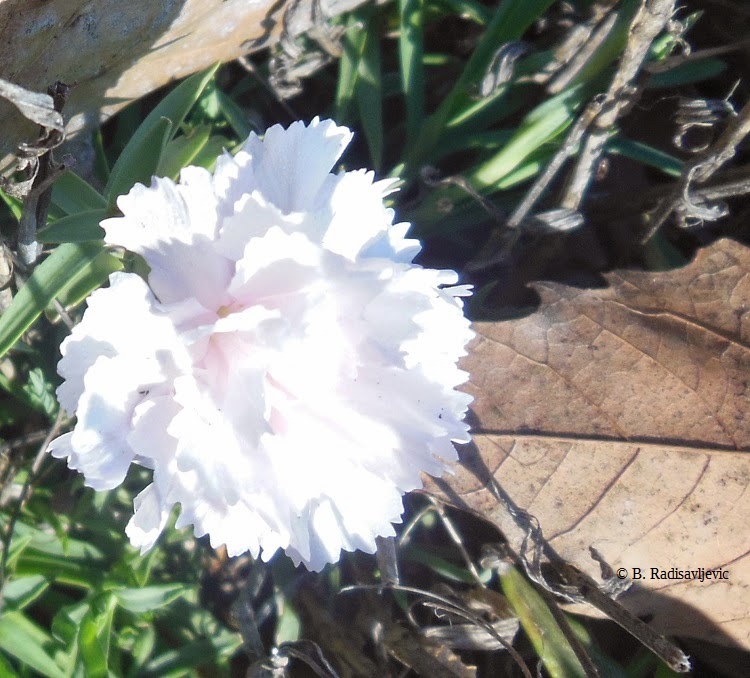
Carnation in March, 2015


Iris in March, © B. Radisavljevic
Iris in March, 2014.


Borage, © B. Radisavljevic
Borage in February and March


Cecile Brunner Climbing Rose, March, 2015, © B. Radisavljevic
Cecile Brunner Climbing Rose, March, 2015
California Poppies at Barney Schwartz Park, © B. Radisavljevic
California Poppies at Barney Schwartz Park, March, 2015


Shrubs Blooming in March

 Rosemary, Watermelon Sage, Holly, March 13, © B. Radisavljevic
Left to Right: Rosemary, Watermelon Sage, Holly, March 13


Rosemary blooms almost all year, and the bees love it. It's at its best now after the rain. The watermelon sage also started blooming this month. The holly still has berries from last year, but it is also flowering and budding for next year's berries. There were so many bees on the holly flowers I could hear them buzzing. That holly plant was like a bee airport. 


Holly with Flowers and Berries, © B. Radisavljevic
Holly with Flowers and Berries


This is a close-up of the holly plant. You can click it or any other photo for an enlarged view to see the details.


I'm not sure what this is. It was blooming at the Caliza Winery on March 8. It is very fragrant, but the leaves didn't look quite like lilacs. If anyone knows what it is, I'd love to know. I'd like to get some.


This is another mystery plant I found at Caliza. It has leaves like a rosemary, but it doesn't smell like rosemary. Please leave a comment if you know what it is.


Also blooming in the weed family are wild mustard, vetch, filaree, and henbit. The first and the last two are edible. We will discuss them next time.

What is blooming where you are in March? Be sure and let us know where that is in your comment so we'll know what blooms where, when.

Tuesday, January 27, 2015

I Didn't Expect to See This

Daffodil © B. Radisavljevic
First 2015 Daffodil, January 26
I did expect to see this daffodil in bloom today, since I knew the bud was ready to open at any time. So this is my first daffodil to bloom in 2015, and many more have buds about to open. Since this daffodil is in bloom in my Paso Robles garden, I was anxious to see what was happening to the daffodils I had planted in Templeton in 2013. They bloomed last year, and I guess I expected to see their cheerful faces in my herb garden soon.

I had occasion to go over there today, so I wandered out to the herb garden ready to snap a photo of my blooming daffodils. What a shock was waiting for me instead! We must have had a lot of wind with the rain last night, because this is what I found where my daffodils were planted.

Butterfly Bush Blew Down in Storm © B. Radisavljevic
Fallen ButterflyBush 


My first reaction was to wonder what had  come down. Then I decided it was my butterfly bush missing. I had been pretty lax about pruning it, but I never expected this to happen. I wanted to drag it off my garden, but then I noticed the baby plants near the roots.

Baby Butterfly Bush Plants © B. Radisavljevic
Baby Butterfly Bush Plants Attached to Mother Plant


The leaves were also starting to come back, and a bit of root was still in the ground. This is how the root looks.

Exposed Roots of Fallen Butterfly Bush © B. Radisavljevic
Exposed Roots of Fallen Butterfly Bush


I hope I can get over there again with some pruners before the plant is dead . Since my physical activities are still restricted, I can't drag the plant away. But I think I can cut some of the new growth and try to root more plants. I think I can also cut away the babies so they can take over for the mother plant.

I'm hoping I can cut some of the branches off where the daffodils should be and see what has happened to them. I really shouldn't do these things for another two weeks, but I might be able to at least throw more dirt and water over the exposed roots to keep the plant from dying until I am allowed to garden again.

For comparison, you might want to check the post where this butterfly bush was still young, as were the plants around it, so you can get a feel for the shape of this garden.

Have you suffered any storm damage to your plants?

Thursday, January 22, 2015

Almost Daffodil Time

As I was trying to pull out some grassy weeds last week, I was surprised to see daffodil plants pushing their way through the ground and into that grassy mess. It's not the first one I've seen in the past couple of weeks. I'm wondering how long it will take them to bloom?

It's very frustrating to be under doctor's orders not to do any gardening while you see more weeds creeping in every day. I want to pull them before they take over. I need to be patient and wait another couple of weeks. I want to get that grass out of there.

I took this photo today, and it looks like it will bloom any day now. Last year the first daffodils bloomed here on January 27.


This is another plant that's even closer to blooming, I think. It was also taken today. It's right at the front of the flower bed and doesn't have as many weeds around it. In fact, I have little daffodils pushing their way through the soil all over my Paso Robles garden. By the time I am able to get to my Templeton home again, the daffodils I planted there should be in bloom.

Evidently, It's not just daffodils. I also saw a few tulips poking their heads up today. I think I planted more than these, but these are all I see now. I'll be watching for more. I'm glad the bulbs will start to bloom soon. The calendula flowers could use some company. And a bit more attention from me.


Calendula and Kale on January 18, 2015

Saturday, January 17, 2015

Jack Frost Pays a Visit and Bugs Invade

In the little time I've been able to be in the garden this week, I've noticed that a few of my plants have suffered from recent freezing temperatures. One has been my black sage. Fortunately, only the tips of some stems were affected. 


The hardest hit plants have been my Lilies of the Nile and my gazanias, but I expect both to bounce back. These are my poor Lilies of the Nile. 

Perhaps as unwelcome as Jack Frost has been the invasion of what I believe are box cedar bugs around the exterior walls of the house and on the plants. They seem to like to hide under the gazanias, but I find them everywhere. In this photo they were clumping in the gazanias in late afternoon. 

I tried treating them with food grade DE Diatomaceous Earth today. This is supposed to puncture the exoskeletons of the bugs  enough to dehydrate them, so it is completely non-toxic to the soil, pets, and humans. I sprinkled it on the leaves of the gazanias where I saw the bugs and anywhere else I saw them. But one has to be careful not to put it anywhere that would attract a beneficial insect such as a bee or butterfly.  It can kill them, too. You have to use this when it is dry, since water makes it ineffective. 


I'm waiting to see how well this works on the bugs, but it seems to be working well on ants inside the house. I hate using poisons in my kitchen. I bought ten pounds of this and so far it's doing the job for me. 

Monday, December 22, 2014

Hidden December Blooming Scabiosa Flower

This afternoon I went out to harvest some kale from my front flower bed, and to my right I noticed a flash of light blue hidden in a clump of dried hyssop. I hadn't realized when I wrote my post yesterday that my scabiosa, better known as the pincushion flower, was still in bloom. So I need to add it to the list of things that bloom in Paso Robles in December. 

The hyssop itself had bloomed all the way into the end of July and then the flowers dried to the way you see them here. It's time to cut it back. I hope my gardener will cut it and all but the new growth on my oregano back when he comes tomorrow. 

I also need to cut the top dead spikes from my mullein plant, since the secondary shoots from it are still trying to bloom. The top photo below was taken last week, and I see I also need to add the gazanias to the list of what's blooming in December. It blooms almost year round. You can see the yellow gazanias near the wall in the second photo, which was taken today. The first one below shows the front flower bed from a distance. Here the mullein is just a silhouette, but you can see the long dead flower spikes on top. Those are what I need to have cut.


Here you see a close-up of the bottom part of the mullein that is trying to bloom again. Click to expand the photo. To the right of the mullein is a kale plant, and there is another one at the left toward the back. Right behind the first kale are the blooming gazanias. To the right of the mullein is some tricolor sage, not in bloom. It has never bloomed for me, but the leaf color contrasts with surrounding foliage. 

The other thing obvious if you expand this photo are the number of weeds and weedy grasses beginning to take over any bare ground. I had surgery just before all the rains and I am restricted from any gardening activities for another six weeks at least. I want to be getting those weeds out. It's killing me to just watch them keep the light and nutrients from seedlings struggling to emerge. I did have someone at least pull the tops off some of these grassy weeds today, but it only made a dent. I can hardly wait to get my hands in the dirt again and start doing what needs to be done before it's too late. 

Have you started your seasonal weeding yet? Those of us in California need to start dealing with the baby milk thistle and poison hemlock plants and other weeds I see starting to claim their ground. Click the link to see photos of the most common weeds on the central coast we need to deal with early. 

Sunday, December 21, 2014

What Blooms in December in Paso Robles?

Flowers Do Bloom in December

This month I've had a lot of time to roam my Riverbank tract neighborhood in Paso Robles to see what's blooming. It's good information to have when planning gardens. What you see to the left is a day lily I saw on my walk today, December 21. 

What Blooms in December in Paso Robles?
A Day Lily in December

A Timely Rain Gave the Flowers a Boost


Usually, winter is the time when there is very little color besides green in most gardens.  We have been fortunate to have more than average rainfall compared to last year during autumn, and we still have lots of clouds that seem to promise more rain. All that rain is turning our brown grass green again and giving our garden plants a much-needed drink. I photographed this sky yesterday, December 20. 


What Blooms in December in Paso Robles?

I hope we get a lot more rain this season because all the plants love it. 


What's Blooming in My Own Garden


What Blooms in December in Paso Robles?
Calendula Flower in December


I was expecting to see my calendula in bloom because calendulas add cheer to my garden when almost nothing else is blooming, and I wasn't disappointed. The rain has really helped them thrive. 

What surprised me was that a purple iris started to bloom. Maybe the rain woke it up. I had planted it a year ago but it didn't bloom in April like the other irises. It was a welcome sight. I wonder if it will bloom again on schedule in April or whether it just wanted to welcome me home from the hospital after my neck surgery this month. 


What Blooms in December in Paso Robles?
Iris in December

My holly is also in bloom. The berries from the holly help carry the birds such as bluebirds, woodpeckers, and mockingbirds through this time of year. 


What Blooms in December in Paso Robles?
Holly in December


What's Blooming in My Neighbor's Gardens?


When I don't limit myself to what I have in my own yard, there are many more options for color in December.  Both I and many of my neighbors grow roses and rosemary. Many rose varieties are still blooming. 

The yard below got rid of its lawn to conserve water and the attractive plants they have chosen to replace the lawn include both roses and rosemary. I think you will easily find the red roses in the center. Next to them on the right is a smaller white rose bush. The rosemary is on the slope to the left. 


What Blooms in December in Paso Robles?
My Neighbor's Xeriscaped Yard in December

I also grow rosemary. I started with a plant that was already there when I moved in, and then I easily rooted more in water within a couple of weeks. I used those to expand the drought-resistant shrubs in my own garden. Almost everyone in my neighborhood has rosemary. It not only has attractive tiny blue flowers, but it attracts bees and helps carry them through the winter. Read more about landscaping for the bees. 

The city of Paso Robles also uses a lot of rosemary in its landscaping. It's on the slopes in Larry Moore Park and in the parkway between Riverbank Lane and the Park. I show it below under a sweet gum tree that still has a few red leaves. 


What Blooms in December in Paso Robles?
Sweet Gum Leaves and Rosemary

After I headed back home I passed some other homes that had flowers that surprised me by being in bloom in December. The poinsettia didn't surprise me. I would expect to see it now. But those sunflowers next to it stopped me short. On the left of the poinsettia, I believe we see a smaller sunflower variety. I'm not sure what the small white flowers were because I couldn't get close enough for a good look. 


What Blooms in December in Paso Robles?
Poinsettias and Sunflowers in December


A couple of houses down were these blanket flowers brightening their yard. 


What Blooms in December in Paso Robles?
Blanket Flowers in December


Notice the mallow plant in the lower left corner. It's an edible weed you can substitute for spinach. Learn how to use mallow.


What Blooms in December in Paso Robles?
I came across another plant blooming I couldn't identify. To the left, you see a closeup of the flower itself. It's very small. But this section is just part of a large clumping plant. I show you the entire plant below. If anyone can identify it, please comment so we can correct this information. 


What Blooms in December in Paso Robles?
Mystery Plant in Bloom in December


Growing close to this plant is another I believe is a variety of lavender. Most of the lavender growing in our neighborhood has stopped blooming, but this variety is still going. 


What Blooms in December in Paso Robles?
Lavender in Bloom in December


When I got home from this walk, I got the camera out again to capture my watermelon sage. It, too, is still in bloom. See it below. Many of my neighbors also have a red sage in bloom. 


What Blooms in December in Paso Robles?
Wild Watermelon Sage in Bloom in December


Yesterday I took another walk and didn't get very far before I saw something else I didn't expect -- a blooming zonal geranium. These usually die when it gets cold, but it's not that cold yet this year. It certainly brightens up my neighbor's garden. It's in her new drought-resistant landscaping makeover. 


What Blooms in December in Paso Robles?
Zonal Geraniums in Bloom in December


One of the other plants I'm seeing all over the neighborhood is society garlic. It blooms through most of the year and is drought tolerant. If you crush or cut the leaves, they have a faint onion or garlic smell, which is why most people don't use society garlic in cut flower arrangements. The Sunset Garden Book says the chopped leaves can be used as seasoning. See it below.


What Blooms in December in Paso Robles?
Society Garlic in December


I'm sure I haven't covered everything that blooms in December in this area, but there's enough here to add to your garden to see that it will have some Christmas color before next December rolls around. Many of these plants add color for months. 


What's blooming in your December garden?

Sunday, November 09, 2014

Why I Stopped Hating Coyote Brush

Garden Fence Tries to Keep Coyote Brush from Invading Garden. That deer fence is six feet high. 

When I first moved to Templeton, California in 1991, I could not even name the invasive shrub that seemed to spring up everywhere, often in the company of poison oak. In the photo above, you see it lurking just on the other side of my garden fence. What you can't see in this photo is the poison oak lurking behind it and in its depths, making it hard for someone to go in and get rid of all of it. You can enlarge any photo by clicking on it to see the original size.

Female Coyote Brush in Bloom
Once I got a garden planted inside the fence, I found out just how invasive the coyote brush was. Its seeds blow in the wind like dandelion seeds, and where they land they become new little coyote brush plants. Soon ground not covered with anything else was full of small coyote brush plants. You can read all about coyote brush and see photos of everything I'm describing in detail in my HubPages article "Coyote Brush: Blessing or Curse."

Many photos in the article referred to above show you how long the roots of even the smallest plants are and how annoying coyote brush can be when it's not controlled. It ruined a trap I forgot to put away. It often grows right next to something you value before you even notice it, making it very difficult to safe the plant you want. The article will help you recognize even the smallest seedlings, since the best way to get rid of this is to pull the plants while they are still small.
Root of Small Coyote Brush

It's only after years of living with and studying my coyote brush and that on other properties that I'm beginning to discover that it has some virtues. First, in a land often without enough water to sustain many shrubs, the long roots of the coyote brush enable it to seek water the roots of most plants can't reach. This makes it drought resistant. It is also resistant to fire. In dry country where hillsides can be tinderboxes, coyote brush does not provide good fuel for any fires that might break out.

Although deer don't like to eat it, coyote brush does help hide them, and it also provides shelter for other small wildlife and birds. Quail love to take cover under its branches, and I often see them scurrying near it. Bees and butterflies also love its nectar, and since it blooms in late fall and winter, it helps the bees survive the winter when they can find little else to eat.

One very cold winter, almost all the plants in my neighborhood lost their leaves and turned brown. Only evergreens kept their color, but that still left a countryside mostly green and brown. It was then I noticed that the coyote brush was the one contrast to a very drab landscape. It was coyote brush that lightened the hills . See how this bush stands out from the dormant poison oak around it? The snowy white bushes are the females, and the males are mostly green from this distance.

Coyote Brush in Winter
The dead looking brown shrubs surrounding it are dormant poison oak. They can still give you a bad rash. 

I have come to the conclusion that coyote brush serves a purpose in God's plan I was late catching on to. It adds beauty to winter hillsides and helps feed the bees when they have little for forage. Having several of these shrubs on your property can help protect against fires spreading. So if you have lots of space you don't need for other plants, you may find coyote bush is a friend you can give a home. Just keep it where you want it and watch out for spreading seedlings where you don't want them. This forest was once just a couple of bushes.


Related Posts Plugin for WordPress, Blogger...