Monday, February 19, 2007

New Life in the Garden


It's been a long and cold winter. On New Year's Day it was beautiful and I planted some seeds for winter vegetables like radish, lettuce, Oriental greens, and more. And about the time they should sprout we had a hard frost for several nights. I still have some of the radish spouts, but they never grew. I'm waiting to see if the Oriental greens that sprouted will grow. Meanwhile, on Feb 4, I planted another batch of everything. Still no new spouts. I think I may have dampening off in the raised beds. I planted some brussel sprout plants in Feb., but they have not grown much. Five went into the raised bed with a row cover. The other went into a pot with no covering. The one in the pot disappeared. The five in the raised bed are still there -- just not any bigger.

The January frosts seemed to kill eveything -- even the gazanias which I transplated in January -- just before the frosts. I had taken the plants from my other house in a neighborhood. Almost everyone in the neighborhood had them. And after the frosts the neighborhood was a depressing place. It seems most of the plants were heaps of dead leaves. There's not much that looks worse than mounds of dead gazania leaves.

Today, after about two weeks doing very little in the way of garden care except laying papers and cardboard to block weeds before the rains, I decided to hoe some of the weeds I couldn't get covered. I could only handle about three minutes of that before wearing out, so I decided to hand-weed my herb bed where I had planted all the gazania transplants. Almost everything in that bed had looked pretty dead except the irises and the rapidly growning weeds, and the carnation I had planted in a pot. At least I could kneel to do the weeding. And when I got close, I saw some fresh green shoots coming from almost all the plants I thought were dead. (See picture above.) I cut away the dead parts, pulled the weeds and noticed a few new poppy seedlings popping up. So far one borage plant remains from last year. The frost didn't kill that. But a gopher knocked out the other one last week, so I have a feeling my borage, about to bloom, is not long for this world. I'll have to plant one in a pot if I want it to be able to reseed, I guess.

After I finished the bed by the kitchen window, I moved to the bed by the pumphouse wall. Most of what was planted there survived. When I saw how destructive the frost was in the other beds, I covered almost everything in this bed with dry leaves. It seemed to work. And I also got my first daffodil blossom there today, with another about to bloom. All the daffodils I planted in the fall are started to emerge.

There still may be a few weeds in my beds I didn't get out, but I got the worst of them and gave the other plants breathing room. Now the big project is to hoe weeds before they get too big to hoe, spead all the cardboard I can get to block as many as possible, and start vegetable seeds indoors. The garden centers already have leggy tomatoes, but I wouldn't dare put them out until I know what the weather will be doing. So I guess I'll grow my own. I hope to grow at least tomatoes, sweet peppers, cukes, squash, and lettuce. I'd also like to grow root vegetables, kohl rabi, and chard. And, of course, flowers.

Saturday, December 09, 2006

Winter is finally here!

It seems we almost had no autumn. We went from hot to cold, with only a few just right days in between. And tonight our rains started in earnest.

Since I last had time to post we finished harvesting everything. We added some lantana and mums to the bed I see from my kitchen window. I planted daffodil bulbs in all the beds. I've weeded and watered until it rained. I pulled up the tomato and cucumbers. I put down a cardboard, newspaper, and wood path through the main vegetable so I can walk from the gate to the raised beds without getting muddy feet and so there will be at least weedless access to everything in the spring. I'm hoping I'll have time to keep up with the weeds as they grow during the winter and early spring so I won't face what I did last year when the ground is accessible again.

I wish the frost had not come last week and killed my blooming sunflowers before they could finish producing their seeds. But at least I had them to look at for a season. My borage is still blooming and will probably reseed where it is. My chard plant is huge and looks like many in one. The stem is as thick as a small tree. It's the only growing thing I can still harvest and eat. I have one lone blooming lettuce I hope will reseed.

As I look back over the year I see progress. I now have a lot of color to look at from my kitchen window. Since I've added new perennials and planted bulbs, I expect to have color in both the spring and fall. Indeed, I still have calendula and coreopsis in bloom, and several herbs. I hope they will also multiply. My bed by the pump house isn't doing as well as I'd hoped and some plants died unexpectedly. But I planted daffodils and irises there, too, and look forward to spring color. Some of the perennial herbs are doing well, and I hope the rain will help my new sword fern get established. I have divided the sage and transplanted some to the other side of the hill. I have some poppies blooming on the hill now, and look forward to some of the wildflowers reseeding by spring. I still need to divide more gazanias if I have time and put them on the hill and by my kitchen window. They do a lovely job of spreading. I'm hoping that next spring I'll be ready with cool season crops to plant so the garden will get an earlier start than last year.

Tuesday, August 29, 2006

Dealing with invaders

I have discovered that in the garden, as well as in life, where there is something beautiful or useful, there will be enemies who want to tear it down. I haven't noticed too many animals eating the weeds if there is anything more tasty around. And in both life and the garden I have to deal with the invaders.


In the picture you will see some yellow flowers, calendula (or pot marigold). The deer love them and eat the blossoms whenever they are hungry and the flowers are blooming. They seem to have no interest in the leaves. The plant in the foreground with the small purple flowers is hyssop. Around the plants you will see wire mesh that's supposed to go in the yet unbuilt raised beds, at the bottom, to keep gophers out. I'm using them here to keep the deer from stomping on my newly planted seeds and seedlings, on their way to munch the flowers.

To solve the hornworm problem on my tomatoes, I finally got some BT and sprayed the plants at dusk. And none too soon. Tonight I saw signs that yet another plant was infested, but I couldn't find the worms. So I hope I got enough BT on the leaves. I guess I'll have to spray every couple of days to keep them away. Tomorrow is busy with things outside the home, so I'll barely just have time to water. I wish more of the tomatoes would get ripe. So far I've only been able to pick from three out of six varieties. The heirlooms are getting huge, but not red. And I believe they are supposed to get red.

Monday, August 28, 2006

Invaders in the Tomatoes

Yesterday I discovered to my horror that there must be an army of hornworms in my tomatoes. I managed to pick off and kill about four, but could see signs that there were many more. So I decided to offer the two neighbor children a job -- a quarter for each tomato hornworm they could pick off, put in a jar, and bring to me. I did caution them to be careful how they handled the plants. They brought me a total of 14 worms, and I did away with them after paying the children. But when I went out to water this morning and cut off the parts of the plants the worms had stripped, I discovered that children can also do damage in their zeal to increase their funds. The vines had slid down from where they had been staked, spread out so they they covered adjacent plants (borage, peppers), and some were broken off, so I lost another four green heirloom tomatoes that way. However, I'm imagining I'm still better off, since I have a pretty good idea how much those worms would have eaten by this morning had they not been caught. And I did find two more this morning. As soon as I have a car again I will have to get some BT. I dare not turn the kids loose again without supervision.

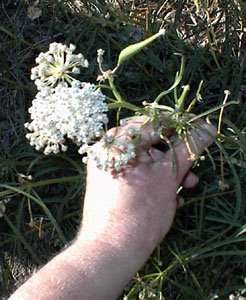
I also have a mystery plant I'd like to grow on the slope next year. It must be native, since it grew on its own in two different parts of the property that are pretty far from each other. It is extremely drought resistant and requires no care that I can see. And it would provide a nice contrast to the purple and yellow colors already on the slope. I've been checking both the books on weeds and the books on wildflowers, but I can't find it. Does anyone have a clue? It's about 18 inches high and forms seed pods. I took pictures today. I have put them here. I show the whole plant, with close-ups of the flowers and pods forming. (Since posting this the first time, I've discovered this is milkweed, and after watching it for a season I have decided it's not very pretty after it forms its seed pods.)


Monday, August 21, 2006

It's beginnng to be harvest time.


And it is the harvest that makes it all worth while in the end. The tomatoes are starting to get ripe. The cucumbers have been abundant. I've cut my lettuce off and it's starting to grow more leaves. I also cut some chard off at the ground after reading it will also grow back new tender leaves.


The broccoli I planted couple of weeks ago is just beginning to sprout in the ground where I planted it. But the lettuce I planted the same day still hasn't begun to come up and it's going to be very hot again tomorrow.


In the bed outside the kitchen window the gopher has finally finished pulling the huge borage completely under. I'm glad it's kept him so busy this past week he hasn't had time or inclination to attack something new. The other seeds I planted a couple of weeks ago are coming up, but not the cosmos yet. Looks like I'll have a couple of zinnias, more borage, and more blanket flowers for the deer to enjoy. I was delighted to see that the yarrow I thought the gopher had destroyed is growing back. And the calendulas I replanted after her attack are beginning to get strong again, and the ones I had almost given up on are beginning to grow some green leaves.

In the bed by the pump house, the amaryllis have stretched out their pink necks toward the sun, as if they had simultaneously turned their heads to see someone. See top above. I like the contrast between the Dusty Miller and the petunias in the foreground. The picture is too small to really see the flat-leaf parsley, gazanias, and the thyme

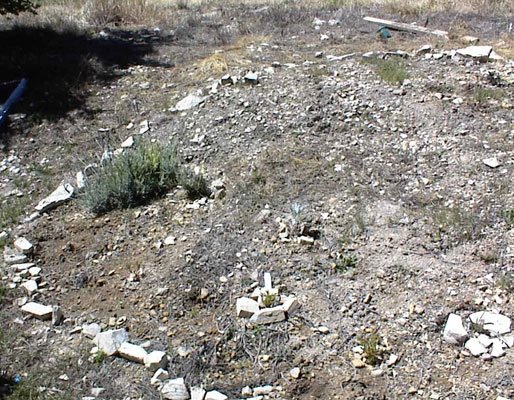
The slope has not changed much, but the irises appear to be settling in and thriving. It will be time to collect some seed from the flax soon. The lavender side of the slope is what's in the picture above as of early in the month. The lavender is really about all that shows up in the bottom picture because I was trying to take in half the part of the slope I'm redeeming from the wild. The gazanias at the bottom don't really show much here, but they are there. My small tricolor sage just barely shows at the back. I ran out of pictures on the disk before I could I could get the other half of the hill. Maybe I'll have time to get that and the amaryllis by the pump house wall later in the week.


Right now I don't have to do much but water, sometimes feed (as I did today), and pick what's ripe. In another month it will be time to start transplanting , sow seeds for the winter garden, and divide the sage and lavender. But now it's time to enjoy.


Tuesday, August 08, 2006

The Gopher Continues to Strike

Since saving what was left of the Lamb's Ears, I've lost one borage plant, two nasturtiums, and one sorrel. I have one beautiful borage left which I expect to go any day now, and some blanket flowers, what's left of the marjoram and cat mint, my newly planted and now blooming camomille, and one other mint-like herb I can't identify at the moment.

Since I don't expect much to be left standing that I can see from the kitchen window, I planted a lot more borage seeds there today, some coreopsis, and some more blanket flowers. And I planted some old zinnia seeds that probably won't spout, but might as well put them in the ground as through them in the trash.

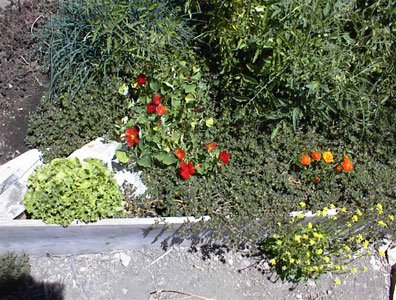
In a corner of the raised beds I planted some more lettuce. I also prepared some ground for planting a fall garden of greens, and transplated some chard into some empty pots. I should have more than enough chard for fall, since I also have two or three plants near the artichoke plants by the kitchen. Although they are all in the ground in that bed, so far the gophers have left them alone. The picture above shows one raised bed as it was a few days ago. That lettuce on the bottom appears to be in a corner, but it isn't. Those are newpapers around it which I'm using as mulch. I removed them today when I planted more lettuce. I also removed lots of purslane which you can see between the lettuce and the chive plant behind it. The bright orange spots on the left are nasturtium blossoms, which show up regularly in our salads. The lighter orange blossoms on the right are marigolds. The green in between is more purslane, which also acts as a mulch. We throw some of that in the salads, too. The yellow just outside the bed in front is wild mustard. I'm leaving it for the added color. The large green plants behind the flowers are tomatoes. Just out of sight in the front right corner is a very large dill plant. I'm following some book's advice about having a dill plant, a marigold and some basil near each tomato. But most of the basil is with the tomotoes in the other raised bed -- the one with the peppers, basil, one chard, and a nasturtium. No dill there.

Friday, August 04, 2006

Saving the Lamb's Ears

Yesterday I found out what was causing the Lamb's Ears plant to wilt so much. As I gently pulled, I saw that one part was loose, so it was the gopher helping herself again. This time I decided to fight while I could. I dug up the root divisions that were left and potted them, watered them good, and put them in the shade to revive. Today they were looking almost normal. Unfortunately, the gophers got their revenge by eating the roots of my two remaining nasturtiums. I must have caught them early, since they were still fresh. So I considered them a harvest, put them in the frig, and had part of the young leaves in our salad at noon. That way losing the plants wasn't a total waste. I stomped down on the ground to cave in the gopher hole to get my revenge, but I imagine something else will be gone tomorrow. I guess when I replant in the fall I'd better put the perennials in cages. Perhaps I'll plant daffodils, since they are supposed to be poisonous to gophers.

The cucumbers are doing very well. I seem to find another one ready every day. The zucchini is slower, but it's in containers instead of the ground -- to protect it from gophers. My container cucumber isn't near as healthy and is starting to yellow. I'm not sure if it's getting too much or too little water. It was also planted a couple of weeks after the others in the ground, so that could also explain why it's not producing more than blossoms yet. I hope the gophers leave my beautiful cucumbers in the ground alone.

I'm getting a few ripe tomatoes now, and I'm hoping the raccoons don't discover them before I get my share. They are planted where the gophers shouldn't be able to get at them. The days are cooler now -- in the high eighties, so garden work is more pleasant that it was last week when it was so hot. The plants are also enjoying the cooler temperatures.
Related Posts Plugin for WordPress, Blogger...